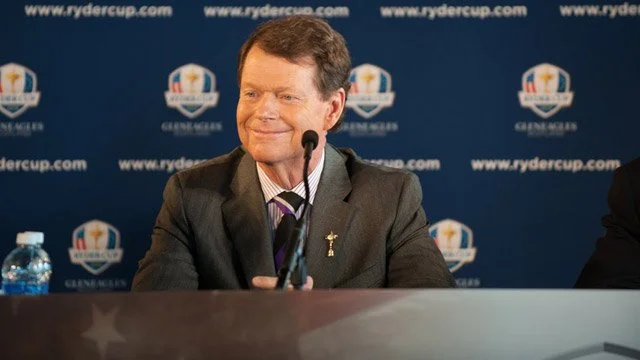
Q + A with Tom Watscon reflecting on Ryder Cup with Terry Moore

Talk about your first Ryder Cup match in 1977 at Royal Lytham and St. Annes and being paired with Jack Nicklaus. How nervous were you on the first tee?

I was nervous but one of my saving graces was the idea I was playing with the best player in the world as my partner. So that relieved some of the jitters. One of the skills of the captain is knowing when and how to pair up a rookie with an experienced player. And our captain, Dow Finsterwald, really knew what he was doing.

After you and Jack won the match 5 & 4, didn’t you play in?

Yes, we did which delighted the gallery but we really did it to see the golf course. In 1977, there were only three sessions overall—foursomes on Thursday, four ball on Friday and singles on Sunday. We played one match per day. In fact, I only played 158 shots total for the matches. It was an abbreviated schedule by design because Great Britain & Ireland thought they might be able to squeeze out a victory but reducing the number of matches to get an edge. But it didn’t work.

Any other special memories from 1977?

My most poignant memory of that Ryder Cup was the flag raising ceremony. Having never competed in the Walker Cup, when I saw that American flag go up it was very special. It was the defining moment in my career up to that point. I was able to say to myself, “I’m playing for my country” and it was a wonderful feeling.

Dow made an absolutely marvelous speech and it sent shivers up my spine. His speech had such an impact it inspired me to be Captain someday.

And in terms of playing experiences?

Along with playing with Jack on day one in 1977, I also fondly remember being paired with Hubert Green in a four ball against Brian Barnes and Tommy Horton. The first hole at Royal Lytham is a par-3 and it’s a hard green to hit. I hit a good shot onto the green while Hubert missed it to the left in the bunker. He made a pretty good bunker shot but still had a long putt for par. Our opponents were both just over the green but they putted up for a certain par. But then I holed my 40-foot putt for birdie two and we were off to the races. We were 6-up after nine holes and we were out in 29. We won 5 & 4 and it was a thrill.

Talk about playing against Seve Ballesteros and Jose-Maria Olazabal

They were a great team. Seve came on the scene in the ’79 matches and he was only 1-4. But after that Ryder Cup he was superb. Seve and Oly had a certain aura about them that said, “We’re not going to lose.” And that’s the same type of aura I want on our team. I want to create that same sort of camaraderie and partnership feeling.

Did you ever encounter any gamesmanship in the Ryder Cup by Seve or anyone else?

I never personally encountered any gamesmanship. The only time I was taken aback was during that match in 1977 when paired with Hubert. We were six up at the time and I was on the 11th green in two at the par-5. The other team was off the green in two and then chipped up to within 12 feet for birdie. After I rolled up my eagle putt short of the hole to 4 feet, they made their birdie putt. When I missed the short putt to lose the hole, a loud cheer went up in the gallery. That cheer didn’t sit well with me. But once I thought about it, it made sense. Their gallery was pulling for their team to win. That’s when I understood what the Ryder Cup really meant. It’s a partisan event.

You were paired with a lot of great players, including Jack Nicklaus, are there any players in golf history you would’ve liked to be paired with?

Byron Nelson, certainly one of the game’s greatest players. He often talked to me about his Ryder Cup experiences. One time he told when he was captain (1965 at Royal Birkdale) Ken Venturi was playing on his team. In one of his matches, Ken hit it short of the bunker on 18. Nelson and the other captain (Harry Weetman) were near the green when the Great Britain captain said, “There’s no chance Venturi will get this ball up and down.” Well, Byron kinda huffed back, “Well, watch this.” Venturi knocked his chip to within inches of the cup and the U.S. won that match, 1 up. Byron knew Ken was a great chipper of the ball off tight lies like the one he faced.

In 1993 when you were Captain, Chip Beck and John Cook beat Nick Faldo and Colin Montgomerie, 1 up. How important was that win?

That victory on Saturday when we were down changed the whole attitude of the team. I remember Byron Nelson saying one time he and his partner were going against two heavily favored British players and the tabloids wrote beforehand that it was the American lambs going against the wolves. But when the Byron and his partner won the next day, the headline read, “Lambs Eat Wolves!”

We had the same sort of momentum shift in 1993 with Beck and Cook. To some, they weren’t supposed to win that match. It took heart to win it and they did. The lambs ate the wolves. On Saturday night in the team room, it was different attitude about the next day. That’s when Chip uttered that great line: “The will to win will even overcome a mechanical breakdown.”

You mentioned at one of your early press conferences how you hope to be lucky as the Ryder Cup captain.

When I was captain in 1993 at The Belfry, I told the team on Saturday night they were going to win tomorrow because “I’m the luckiest SOB in the world.” I told them,”You’re going to have the Watson luck with you tomorrow.” And then Lanny Wadkins chirps up, “Yeah, that’s right, Tom. You are the luckiest SOB around!” So, luck has something to do with it but there’s more to it than that.

You see more holed shots off the green in the Ryder Cup than any other tournament. Why is that? Because each shot is worth more to these players. They’re trying to hole these shots whereas when they’re playing in a normal tournament they might be content to just getting it close. But in Ryder Cup, they’re trying to hole shots. It’s just amazing and it’s not always luck.

How do you describe what happened at Medinah two years ago when the Europeans stormed back to win?

The emotions can change dramatically in the Ryder Cup We saw that on Sunday at Medinah when the first five matches were all winning for the Europeans. That momentum shift really put added weight on the American team. And it only increased with each decided match.

Weather may be a factor at Gleneagles in Scotland. As one of the best players in bad weather, what advice might you lend your team?

There’a good chance bad weather and rain might happen (laughing.) But I don’t need to tell these world-class players how to handle it. It’s simple stuff: keep your hands and wrists warm and dry.

Q + A Jack Berry

Even before I became the founding editor of the Michigan Golfer in 1982, I knew the name of Jack Berry. His by-line in the Detroit Free Press and later in The Detroit News was the one I sought out in my morning newspaper routine. If you wanted to know about golf in Michigan, you read Jack Berry. He was the man before the man. Later when I nervously took the editorial reins of Michigan Golfer, I told the publisher—my friend and business partner Art McCafferty—we had to secure Berry as a regular contributor. Fortunately, after a cordial and disarming lunch meeting with Art and me, Jack agreed to be regular and not overly compensated lead columnist. I still recall leaving the restaurant and saying to Art, “We’ll be alright. Jack Berry’s with us.”

In those early days, the magazine made a little name for itself for doing several high profile and exclusive interviews with such prominent names as former President Gerald R. Ford, Tom Watson and Ken Venturi. In 1984, I also conducted an interview with Berry when he was the President of the Golf Writers Association of America, a prestigious organization where he later served for nine years as its Secretary-Treasurer. 30 years later, I’ve finally gotten around to a follow up interview. Please excuse my procrastination! Over that time span, Berry has continued to cover golf—for a variety of media outlets, including internet TV—with passion, accuracy and keen insight. Along the way, the Michigan Golf Hall of Fame member has received a number of well-earned national awards including the PGA of America’s Lifetime Journalism Award and the Masters Major Achievement Award—which included as a perk a reserved Media parking spot!—for covering more than 40 Masters tournaments. On a personal note, I’ve been enriched by his friendship, company, humor and counsel. I’m still muttering, “We’ll be alright. Jack Berry’s with us.” —Terry Moore

Being a voracious reader, share some of your golf reading habits.

Even though print has changed dramatically, I still read and follow Golf Digest, Golf Magazine, Golfweek and SI Golf Plus. As far as national writers, I admire Jaime Diaz, Tim Rosaforte, Brian Hewitt, John Garrity, Jeff Rude, Jim McCabe and Karen Crouse, to mention a few names. Of course, Doug Ferguson of the Associated Press does a great job. He’s in that select and rare company that covers golf, mainly the PGA Tour, on a full-time basis. Very few people do that anymore.

What do you look for and admire in good golf writing?

I like golf writers with a light touch. There are a number of writers who have a gift for a strong lede and know how to maintain a clever voice while telling a good story. I also look for the score! (Laughing.) Even today, you’ll see some established writers omitting the player’s or the tournament score. I must confess it happened to me a few times when I used to cover the Detroit Red Wings. Yep, I occasionally left out the final score in my game story. Then I either caught it at the last moment or the copy desk bailed me out. But in general, a good story gets back to the five W’s: who, what, when, where and why.

Talk about the work and craft of sportswriting.

To write well is hard work. And you have to ask a lot of good questions. Then you take those answers and turn them into an interesting story or article. For example, I was proud of the Detroit Free Press story about the guy who walked 21 miles a day and took several buses to get to and from work. It became a national sensation.

To be able to write a story about such a hard-working person, someone not complaining or asking for any special favors was very impressive. It’s the essence of good in-depth newspaper writing.

And what about your non-golf reading favorites?

Well, I love reading the novels and short stories of Jim Harrison, a Michigan native who attended Michigan State, my alma mater. Before moving to Arizona and Montana, he spent a number of years in northern Michigan and frequently writes about it and the Upper Peninsula. He’s fun to read and has a great take on life and circumstances. I particularly enjoyed The English Major.

Is the game of golf really in trouble or has its woes been overstated? Recently the USGA President made the observation that although golf’s participation is not growing, the only two sports that are showing any growth are lacrosse and soccer. What’s your take?

I share the opinion that’s it’s been overstated. I’m really impressed with such initiatives as the Drive, Chip & Putt Championship and the PGA Junior Golf League. Both are growing like crazy. There’s definitely cultural and social factors going on—such as time constraints for families and so many recreational choices for kids—but I don’t think golf is dead.

With the passing of Billy Casper, what are your memories of him and his 1958 Buick Open victory at Warwick Hills?

I remember in ‘58 Palmer (Arnold) shot a course record 67 in the second round and then a big storm hit that prevented the rest of the field from finishing. In those days, the Tour just washed out all the posted scores and started over the next day from scratch. It was a bad break for Palmer and good one for Casper as he went on to win the tournament. Speaking of Casper, I had the chance to see David Feherty’s re-airing of his Casper interview and it was excellent. Casper was just terrific in it.

From your early days with the Detroit Free Press, talk about one of your first encounters with Ben Hogan.

Billy Casper once described Ben Hogan as having an “abrupt personality.” I’d say, tell me about it! At the 1961 U.S. Open at Oakland Hills—my first Open— I was up in the men’s locker room on Monday during tournament week along with John Walter, the longtime golf writer of The Detroit News and a few other reporters and we were chatting with Hogan. Suddenly, Hogan asked in a sharp tone, “Why wasn’t there any Open stories in the Free Press yesterday (Sunday)?” So I spoke up and said, “Well, that was my day off.” He was still in a huff about it when John came to my defense by saying, “It’s not Jack’s fault, Ben, it’s the paper’s. He wasn’t working.” I really appreciated John saying that. Nowadays there would always be a Sunday advance on a major tournament. But back then, it didn’t happen and Hogan wasn’t happy about it. Yessir, he was quite abrupt.

In Michigan, what individuals did you chat with and lean on for the latest information?

Walter Burkemo, who won the 1953 PGA, always had good stories. He was a friendly Detroiter from the east side and a fine player, particularly at match play. I also enjoyed some of the old club pros like Chet Jawor, Ray McGuire, Bill Uzelac and Warren Orlick—to mention just a few names—because they always knew what was going on. Warren was a past President of the PGA of America and became the Chairman of the PGA Rules Committee where he was usually seen at most of the majors. One time, he was working the famed island green 17th hole at the TPC Stadium Course. After a round, I asked him how many balls he saw go in the water. Warren refused to tell me because he felt the information would be embarrassing to the players. Today the networks keep a running tally of the drowned shots.

On that note, as a reporter didn’t you compile a “worst ball” score for the Michigan Open at The Bear at Grand Traverse Resort?

Yes, I took a little devilish delight in doing it. Back then, The Bear had the reputation as one of the toughest courses not only in Michigan but in the country. So I did my part by keeping and reporting on highest score recorded on each hole. One year the worst ball nines were 81-82.

And given this time of year, what about your Masters experiences?

I’ve been fortunate to have attended 43 of them. It’s the best run tournament and event not only in golf but in all of sport. Everything from the concessions to the facilities to the way people are treated are all unbeatable. And if you’re any kind of sports or golf fan at all, you know that golf course even if you haven’t been there in person. That’s the advantage of the Masters and Augusta National: it’s a part of everyone’s television history. Besides, the Masters doesn’t need loud music, dancing and fireworks to make it “an experience.”

Talk about your involvement with the Free Press Junior Golf School and some of the young players you met.

I got to know the Parrott youngsters in that school—Janina and her brothers. Their father was a great guy and a Detroit firefighter. He always called me “Mr. Berry.” And Janina Parrott Jacobs became one of the best women players in the state. I also met Joyce Kazmierski during that time. Later becoming a prominent college and LPGA player, she also served as President of the LPGA. Another junior player in the program was Ernie Harwell’s son, Gray. In fact, Gray won the boy’s championship one year.

If one of your grandchildren or somebody’s else’s ever asked you about becoming a writer or a journalist, what would say?

Well, I’d say to them that I loved it. But I’d also tell them they’d never get rich doing it. But the intrinsics far exceed the external rewards. I’ve met many great people and have visited so many beautiful places because of my career and golf. It’s been a wonderful experience. John Walter said it best about the golf beat, “You meet the nicest people and go to the nicest places.” I couldn’t agree more. And unlike some of the team sports I covered, golfers spoke in complete sentences and I didn’t have to bleep out anything.

A member of the Michigan Golf Hall of Fame, Terry Moore lives in Grand Rapids and serves as a Governor for the Golf Association of Michigan and as a Board member for the Michigan Golf Foundation.

Q & A with Legendary Designer Pete Dye by Terry Moore

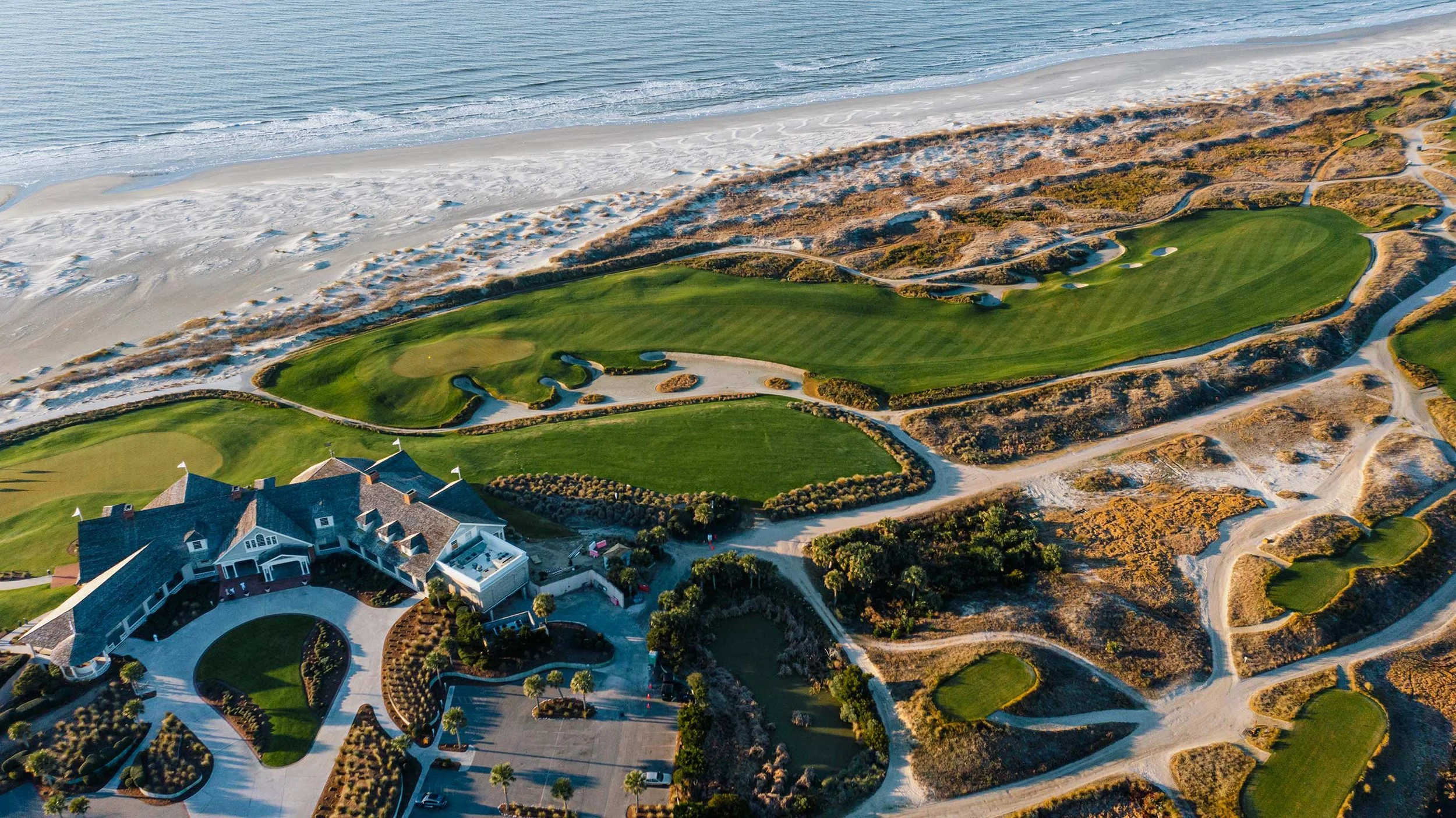
A few weeks prior to the 2012 PGA Championship at the Ocean Course at Kiawah Resort designed by Pete Dye, I interviewed the esteemed golf architect who was inducted into the World Golf Hall of Fame in 2008. Dye passed away on January 9 of this year.

How much pressure was it to design the Ocean Course for the ’91 Ryder Cup?

It was a unique situation because the first players on the course were the team members. A brand-new course making its debut never happened before in the history of the Ryder Cup. It was the opportunity of a lifetime.

Were there special challenges in the building process?

We just started building the course when Hurricane Hugo hit the area [1989], wiping out a lot of our work. It was a mess. But then the governor issued a special moratorium on regulations so we could clean up the course including some of the swamps. We rebuilt the dunes and turned some of the salt-water marshes into freshwater ponds. Without the hurricane, the course wouldn’t have turned out as well as it did. Then Alice [Pete’s wife and fellow designer] made the smart suggestion that some of the tees and fairways needed to be raised so the ocean could be seen.

On Sunday at the 1991 Ryder Cup, did you ever think the par-three 17th would play as brutal as it did?

A few days before the start of the matches, the wind was out of the south and southeast. That meant it was behind the players on 17, which was set at 197 yards. [U.S. team player] Ray Floyd told me during practice rounds players were hitting 6- and 7-irons there. Then the weather forecasters predicted that the winds would change and come out of the north and northwest for the weekend. I mentioned to someone at the PGA they should move up the tee markers and the gallery area. But it was decided to leave them as planned for the final day. When the wind changed direction and became a strong head wind on Sunday, Hale Irwin actually hit a wood at 17 to clear the water.

How have you altered the course and protected it against the added length of Tour pros?

I went back there over a year ago and made many improvements. When I was building the course in 1990, I was already worried about how far the pros were hitting the ball. So I pushed dirt for some back tees then covered them up with high grass as kind of an insurance policy if they were ever needed. This year they’re going to use a number of those new back tees for the PGA Championship. We also brought some of the bunkers into play at 310 and 320 yards, where before they were at 280 yards. In all, we made changes to eight or nine holes to some degree with tees, greens, and bunkers.

What’s the most misunderstood aspect about you?

Many people don’t realize that I’ve never drawn up plans for a golf course. Some of my friends in the business devise elaborate design plans and then have someone else build it. I’m the only one dumb enough who just builds it.

Most misunderstood aspect about course architects?

When you’re building a golf course, you’re building it for the owners and trying to match what they want done and the type of course they envision. It’s rare when you have an owner who says, “Build me a course for the Ryder Cup.” Most of the time, it’s a residential property and you build it for the members like I did in Hilton Head at Long Cove. One of my earliest courses is Delray Dunes in Delray Beach [Florida]. I built it for membership play and it’s held up well over time. So in spite of what some people think, I’m always conscious of the type of players I’m building the course for.

What do you want to do in the future?

Well, I look forward to being involved with the Stadium Course in Ponte Vedra if the PGA Tour still wants me. I’ve reworked that course five different times now. Golf evolves and when you have a course like that you have to stay up with the changes in the game, the equipment and also agronomy. I had to rework all the greens at the Stadium Course due to how fast the greens were getting. Same with Harbour Town, where I never dreamed it would happen.

If you could sit down with two or three people at the 19th hole, past or present in golf history, who would they be?

Ben Hogan, Ben Hogan, and Ben Hogan. I played with him several times and it was always something special. I’ve played with a number of great players over the years but no one hit it as consistently on the clubface as Hogan did. Before his accident, he was such an outstanding ball-striker. But it was even more unbelievable to see him recover from his serious injuries and eventually strike it that well again. As an aside, I like to tell people that when Hogan won the ’53 U.S. Open at Oakmont, those greens were probably only rolling at a six if they had used a stimpmeter back then.

Q & A with Louis Oosthuizen, 2012 Masters Runner-up

How does a hooked wedge shot trump a double eagle, the game’s rarest feat? Easy. If the former leads to a Masters victory as it did for Bubba Watson last April on the second playoff hole against Louis Oosthuizen. Earlier on that Sunday, South African Oosthuizen catapulted into the tournament lead and golf lore by registering an albatross—three under par— at the par-five second, the first double eagle on that hole in the Masters. However, the 2010 British Open champion ended the tournament tied with Watson and then lost in a sudden death playoff following Watson’s incredible shot out of the trees on the tenth hole. The following week Oosthuizen, 30, bounced back and won the Malaysian Open on the European Tour where he’s now won five times. Recently, he chatted with Terry Moore about his thoughts on last year’s Masters, his game and his upbringing in South Africa.

It must have been a challenge to keep your emotions in check after the double eagle on Sunday with so much of the tourney in front of you?

Yes, it took awhile to settle in because all of a sudden I’m leading the tournament. My whole mindset before then was to be patient and not get ahead of myself. I even considered the possibility of leading the tournament somewhere on the back nine, but not the first. But the galleries were great after the double eagle, congratulating me at each tee box.

Were you aware the patron who caught your historic ball as you walked off the second green ended up receiving two lifetime Masters badges and an opportunity to play Augusta National after he gave the ball to the club?

Yes, I was informed afterwards by Mr. Payne (Masters Chairman Billy Payne) that the gentleman would receive lifetime badges to the Masters and also have a golf day there. In fact, Mr. Payne actually returned the ball to me after the round; but I signed it and gave it back because I felt the ball should remain with the golf course. But I will always have the memory of that shot.

In the playoff against Bubba, you made some great putts that must have looked as if they were in the hole.

Yes, definitely. On the first putt on 18, I really thought I made it because I’ve been watching that particular putt for years on television. A number of players have had that putt to win. So I knew what it was going to do. I hit it exactly on the right line and it looked like it was going to fall right into the cup. Then a foot from the cup it stopped breaking and grazed the lip.

On the tenth hole when putting for par, I was under a lot of pressure to make it knowing Bubba was so close for birdie. That putt was so quick but I decided to hit it at normal speed, aim at the top side and just let it break inside the cup. Again, a foot from the cup it looked perfect and then it just broke below the hole.

What happened on your 3-wood tee shot off the tenth hole in the playoff? And did you consider hitting driver?

I was always planning on hitting a 3-wood there and turn it over like I had done throughout the week. I just simply hit on the heel and it didn’t get down the hill. So I left myself with a really long second shot. If I had hit my tee shot well it would have run down the hill leaving myself only a seven-iron.

How surprised were you when you saw Bubba’s second shot out of the trees find the green on the final hole of the playoff?

Actually, I wasn’t really sure what type of shot he had because I wanted to play my own game. But even seeing his shot on tape afterwards, I wouldn’t have played my shot any differently. And looking at his second shot, it was a perfect shot to hook it for a left-hander. A right-handed golfer would have simply chipped it out. Still it was one heckuva shot for Bubba to pull off.

Was it a natural gift for you to have such a model golf swing or did it take a lot of effort? And how do generate such impressive distance?

I would probably say my swing came together naturally. My coaches always wanted my arms and body to work together and in unison and that’s something I’ve worked on. My swing got better over the years by working with my coach. It never really changed in any major way. And in terms of my distance, it has a lot to do with timing and clubhead speed. Look at someone like Richard Sterne (European Tour). He’s only 5’7’’ and weighs 150 pounds but hits it 300 yards. His hands, arms and body all work in synch and that’s what I try to do.

During your Open Championship title romp at St. Andrews, you used a red dot on your glove to help you concentrate in your pre-shot routine? Are you still doing that?

No, I’m not using that method now. I needed it then because I was struggling with my pre-shot routine and needed something to keep me focused. It worked that week. My focus is better and more consistent now so I really don’t need it. Sometimes I go back to it but in different ways. But I’m always working on something, whether it be in a pre-shot routine or a particular swing cue.

Talk about growing up on a farm, getting involved in junior golf and the Ernie Els Foundation?

Actually, my brother started playing golf first and I followed him. I picked up a few clubs and just started playing. Not too long afterwards after seeing my interest in golf my dad took me to a professional coach and where I received a full set of clubs. I was on my way, thanks to the junior program. Later as a teenager I was helped by the Els Foundation with tournament expenses, travel and coaching. I drove each day from the farm to town and the golf course. I also had a little green on the farm but one year a flood came along and took it away. But it was a privilege to grow up on the farm and be in the open spaces. I’ve always been a ‘farm boy’ and still have a farm in South Africa.

How would you compare your game this year as opposed to last year at this time?

I would say they’re similar. It always takes a few weeks to get used to the conditions and courses over here. I’m working on a few things and they’re going well but we’ll see how they’ll turn out.

Q & A with David Graham

Thirty-two years ago, David Graham became the first Australian to win the U.S. Open, the 1981 Championship held at Merion GC outside Philadelphia. He put together rounds of 68, 68, 70 and 67 to win by three shots over George Burns and Bill Rogers. His final round was described by noted writer and golf historian Robert Sommers as “one of the finest rounds ever played in championship golf...under conditions that strain the steadiest nerves, over one of the world’s most testing courses, for the world’s most important championship.” In an illustrious career spanning five decades, Graham won events on six different continents including the ’79 PGA Championship. As the U.S. Open returns to Merion for the first time since his victory, the retired Montana resident sat down recently with Terry Moore.

It’s a tradition that anyone who wins a USGA event at Merion receives one of the club’s iconic wicker baskets adorning the flagstick. Tell us about yours.

When I won at Merion I never received a wicker basket. In fact, I learned at the time neither did Trevino [who won there in 1971] nor did Ben Hogan [1950]. But then around 1989, I received a package from Richie Valentine, Merion’s recently retired Golf Course Superintendent, who enclosed a kind letter which said in part: “Dear Mr. Graham, I’m sending you three wicker baskets. Please pick the one of your choice and please give one to Mr. Hogan and one to Mr. Trevino.” And that I did. I still have my wicker basket and I know Lee still has his. True story and one I’ve never publicly shared before.

Talk about your play in ’81 leading up to the Open. You won earlier that year in Phoenix and played well at the Masters but you were feeling very fatigued.

Unbeknownst to me at that time, I had a heart condition. It wasn’t fully discovered until 2004 when I was placed on medication. I played my whole career not knowing I had a heart condition. But in 1981, after feeling tired and run down, I was diagnosed having a low potassium count. Luckily, I was in good shape and was doing a lot of walking. I was still smoking in those days which was stupid. But a potassium deficiency wasn’t the root cause of my fatigue; it was the heart condition. So with a better diet, I dealt with the low potassium count and I did feel better heading to Merion.

At Merion, you played a practice round with Gary Player. Did he say to you afterwards, “David, I don’t know why you haven’t won more major golf tournaments.”

Yes, he made that comment and I took it as a compliment, especially coming from someone of his experience and stature. It was a huge boost to my confidence on the eve of the tournament that he thought enough of my game to say something like that. It got me thinking, ‘Yes, I should be winning more tournaments.’

Describe your mindset on that last day of the Open.

You educate yourself to get into a position to win. You tell yourself, ‘I may hit a bad shot but I’m not making a mental mistake.’ And I had good role models for handling the pressure. I played in the era of Jack Nicklaus, Arnold Palmer, Lee Trevino, Tom Watson, Gary Player and Billy Casper. I played a lot of golf with Jack Nicklaus. He was always well-prepared. His pre-tournament routine was religious. We all watched and learned from Jack and how he conducted himself— especially in the final round. Fortunately, I was a good student.

With a two-shot lead over George Burns on the 18th tee, what do you remember about your final tee shot?

Everything was okay until I got to the top of my backswing and then it really hit me about where I was. I had the same feeling in 1979 on the 72nd hole of the PGA at Oakland Hills. There at the top of the backswing, an “Oh my gosh” thought filled my head and I made a bad shot. At Merion, I somehow handled the moment better, knew I’d been there before, and hit a solid tee shot. And then I hit a beautiful 4-iron right next to the pin.

Talk about your relationship with Hogan. Reports say he called you after your Open victory and described your final 18 as “one of the best rounds of golf I’ve ever seen.”

He did call me and it was a special moment. Hogan was very nice to me but I can’t say we were close. I played Hogan’s Apex shaft which he designed, developed and maintained total control over. He allowed me to use it in my MacGregor clubs and it didn’t seem to bother him I didn’t play Hogan. The Apex was a state-of-the-art lightweight steel shaft. People loved it. Way ahead of the times, Hogan always felt the shaft should be light and the head should be heavy. Today, everyone wants a lighter steel shaft.

As part of Merion’s Centennial celebration in 2006, you were a special surprise guest.

Yes, the organizers arranged for me to return to Merion without anyone’s prior knowledge. They took me to the 18th fairway where with bagpipes piping I walked and appeared over the crest of the hill now to members gathered around the green and clubhouse. Everyone broke out in applause. It was wonderful; I felt like a knight in shining armor. The club gave me a beautiful presentation medal. Trevino was also invited but declined. There are two things Lee has openly admitted to me that he’d wished he could take back. One was not going to Merion’s Centennial and the other was Lee’s attitude and things he said when he was playing in the Masters. He regrets both but what’s done is done.

What makes Merion still a worthy Open venue?


Well, it’s tight. It demands precise placement of one’s shots. Well-guarded by bunkers, the greens are small with severe putting surfaces. If conditions are firm, getting up and down is tough. It’s fantastic that Merion is hosting the Open again. It’s a classic old course. Logistically, it may be difficult. It may be the last Open played there because how large the event has become outside the ropes.

Discuss the impact made by fellow Aussie and close friend Bruce Devlin when he critiqued your swing in 1971.

Bruce had a pivotal influence on me. He persuaded me to come to the United States in the first place. We played countless rounds of golf together and one day in 1971 at Colonial CC he said to me, “You stand too far away from the ball, you have too strong of a grip and that’s why you can’t get the ball up in the air.” He told me the first thing I had to do was to change the lie of my clubs, that my clubs were too flat. Bruce was a brilliant student of the game so I took all of his suggestions to heart. It took a long time for the changes to click.

Then a year later you won your first PGA Tour event in a playoff against him?

It was a life changing event to win the 1972 Cleveland Open. The course was new and the greens were just terrible. I didn’t win the tournament because of skill but because I putted better on those awful greens than anyone else. I birdied the second playoff hole against Bruce and won. How ironic. Now I was exempt on the PGA Tour and everything changed for the better.

In your prime, how would you assess your putting?

I was a streaky putter whether it be on fast or slow greens. Unlike today, Tour events didn’t all have fast and smooth greens. My key thought in putting was always maintaining good rhythm and repetition. I don’t think the body can function well when the brain has indecision. I focused on being methodical in my putting routine which helped me with my rhythm. It’s the only way to play under pressure.

Waving a magic wand, who would be in your dream foursome?

President Eisenhower, Arnold Palmer and President George Bush (Senior).

And for golfers visiting Australia what three course should be on their bucket list?

Royal Melbourne, Kingston Heath and New South Wales Golf Club which is Australia’s Pebble Beach.

Q & A with Chris O’Connell, Matt Kuchar’s Teacher

Chris O’Connell has been Matt Kuchar’s teacher since 2006. Given Kuchar’s lofty status on the PGA Tour which includes two wins already this season, that in itself is a testimony to his teaching excellence. But in Dallas, TX, where he resides, he’s known as an instructor who can elevate anyone’s game including the recreational, weekend player. A Top 100 Teacher in America by GOLF magazine, O’Connell is co-founder and Director of Golf at the Plane Truth Golf Institute at The Courses at Watters Creek. He’s been mentored by Jim Hardy, the acclaimed teacher and recipient of 2007 PGA Teacher of the Year Award. Recently, he spoke with Terry Moore. Here are excerpts of their conversation.

How did you get started in golf?

I really can’t remember when I started. My family were golfers so it was part of my life early on. My dad was an All-American player at Notre Dame and became one of the best amateurs around Quincy, IL where I grew up. And my mother played as well. My older brother was an excellent player and one of the best in Illinois. I remember playing in the Pepsi Little People’s golf tournament—one of the best junior events in the country— when I was only four years old. Golf always seemed a part of my life.

How did you meet Jim Hardy, the celebrated teacher and your mentor?

I met Jim in 1998 when I began caddying for Peter Jacobsen on the PGA Tour. I was still playing at that time and trying to become a Tour player. But Peter came to Dallas for the Bryon Nelson Classic and through mutual friends, I began caddying for him. In fact, I caddied for him for three years. Peter was in the mid-40s period of his career which is a tough time to compete with the younger set. But he remained competitive and in the process I got to know and admire Hardy and his teaching methods.

What do you consider Hardy’s major contributions to golf instruction?

Well, I’m biased but to me he’s had more original ideas about teaching than anyone. One of his tenets is that there’s not one set of fundamentals but two. People can swing upright or they can swing around their bodies. The swing is a collection of angles, some steep and some shallow, and one has to learn to net them out to neutral at impact. Think about Jim Furyk. He has an upright swing and creates a steep angle but at impact it’s perfect. Hardy also talks about the “pluses and minuses” of students swings. They can be too sweepy or too steep in their angle of attack. The teacher must work with the students to see how they impact ball flight.

How and when did you meet Matt Kuchar and become his teacher?

In was 2006 when Matt was competing on the Nationwide Tour and I was working with Matt Weibring, DA’s son, at the time. Kuchar liked how Matt was hitting it and Matt suggested Kuchar contact me. So he came to Dallas to see me.

What did you work on?

At that time, Matt was a good driver of the ball but not a good iron player. He was too sweepy. He wanted to fade the ball and people wanted him to be more upright in his backswing. I didn’t want to touch his backswing. It was fine. Instead, I wanted him to swing more around his body after impact. To swing more down and through his body and keep going left. I wanted him to be flat on both sides of the ball. There’s nothing wrong with a flat backswing, as Ben Hogan and Lee Trevino proved, so long as you remain flat on the follow through. It has to be a mirror image.

How would you describe your relationship with Matt?

We’re very close. Our families are close. Our kids are friends. Sometimes, teaching can be strictly a business relationship and there’s not much contact outside the range. That’s not the case with Matt and me. Besides, if you can’t have fun and be friends with a guy like Matt, you have big problems.

What did you make of Matt’s winning performance at the Sony? What was he doing well?

Waialae is a course that sets up well for Matt, rewarding accuracy off the tee.  Do that and you have a number of short irons where you can attack.  From the rough you lose control of your golf ball and pars become challenging.  I like Matt's chances when it becomes a short iron contest.

Did you and Matt work on anything in particular in the last year to get him back in the winner’s circle?

I feel the most important area of the golf swing is the downswing which is the area that actually presents the club to the ball.  The majority of our work is always in this club delivery area and we have continued to improve, thereby directly affecting the flight of his ball and its repetitiveness. 

What are key aspects of Matt’s dependable fade?

Most people think a fade is weak because they believe a fade is an open club face.  A correct, powerful fade is actually a closed club face relative to the target with the club path further left than the face.  If people can hit fades by getting the path left of the face rather than the face right of the path they can hit fades that are released and powerful.

When students come to you and say they want to get over the hump and start breaking 80 or 90 consistently, what are your thoughts?

Contrary to popular opinion, I believe the full swing is more important than the short game. And Mark Brodie in his book, Every Shot Counts, proved it. His data showed that two-thirds of the strokes gained were from shots outside of 100 yards and only one-third from inside 100 yards. In other words, how you get off the tee and get on the green is far more important for your score. So to lower your handicap, you have to be a better hitter. And you have to learn how to avoid the big number. That means having a better and more dependable swing.

Talk about the Plane Truth Institute which you co-founded with Hardy?

It all starts with ball flight. When Hardy began teaching he actually went and studied the best teachers in the game. He came away quite confused with their methods. He then took a speed reading course in order to devour all the well-known instructional books. Again, he was confused. But then he came upon John Jacobs, a prominent teacher in England. Jacobs emphasized the key information taken from ball flight. To him, it was the ultimate judge if a student is hitting the ball well or not. You can change your swing but not fix your ball flight. Jacobs wanted to work backwards from the player’s ball flight to find the best swing. Jacobs was the greatest two plane teacher of all time. Jacobs was Hardy’s mentor and Hardy became mine.

Q & A with Ken Nice, Superintendent at Bandon Dunes Golf Resort

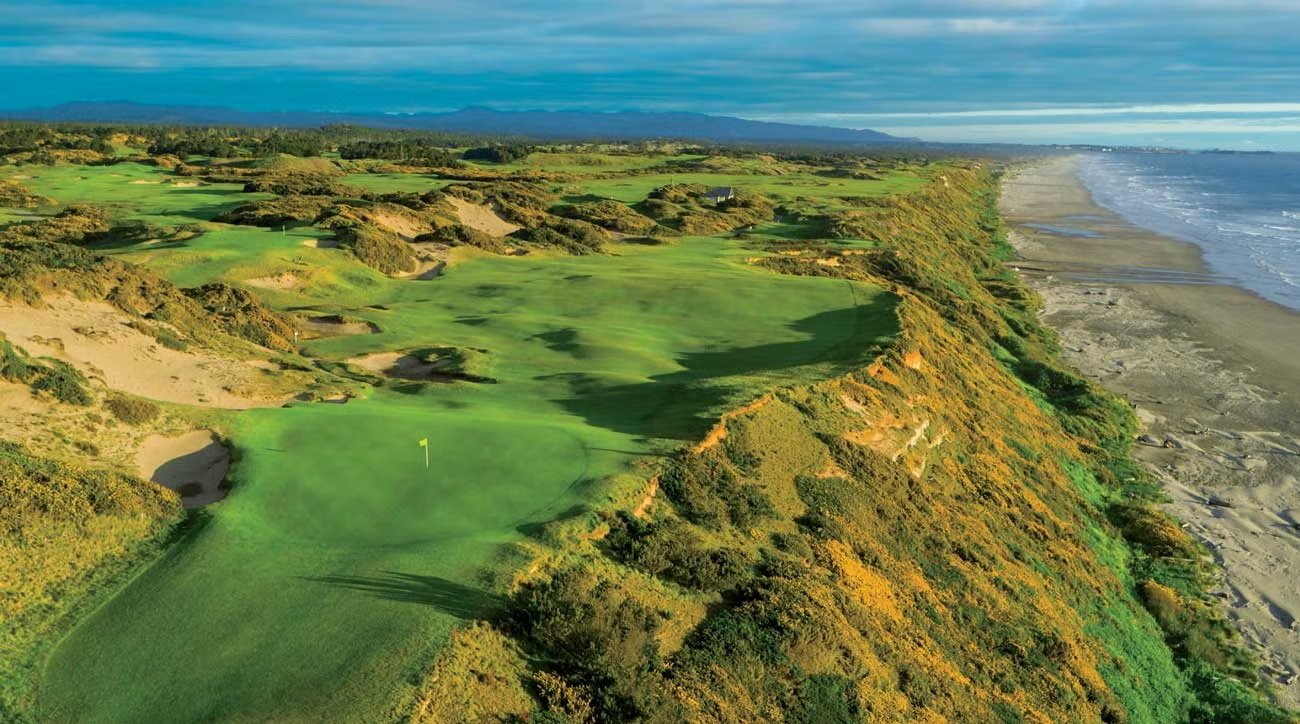
As Director of Agronomy at award-winning Bandon Dunes Golf Resort, Ken Nice has a keen interest in the Open Championship. He and his staff take pride in providing Bandon’s guests the same firm, fast and bouncy playing conditions found at links courses like Royal Liverpool, where the claret jug will be presented on July 20. A native of Corvallis, Oregon and married to his wife Pam for 23 years, Nice has served as a superintendent for Pacific Dunes, Bandon Trails and Old McDonald following a stint as an assistant at Bandon Dunes. Despite the demands of his position at one of the world’s top golf destinations, he still manages to shoot in the low 80s. His best score is a 73 in 2003 at Pacific Dunes. During the winter, Nice is also the varsity basketball coach at Bandon High School. No matter the season, he knows the vagaries of fortunate and odd bounces off hard, dramatic and sporting surfaces. A GCSAA member for 17 years, Nice was interviewed by Terry Moore.

When someone is watching the Open Championship, what would you want the average golfer to appreciate?

I want them to notice how the ball is releasing and moving on the ground. A shot’s adventure continues when it hits the ground. You don’t know how and where the ball will bounce. The galleries overseas rightly applaud a three-iron that is struck well short of the approach and ends up thirty feet from the hole. The release and roll of the shot has to be calculated into the equation and it’s wonderful to watch. In the U.S., galleries like the wedge shot that hits the green and spins back toward the flagstick. Links courses may not appear to be the prettiest at times. There are more shades of brown than shades of green and that’s a good thing.

What’s the super’s regimen for fast, firm and bouncy turf found at Bandon Dunes and at the Open Championship?

We’re certainly blessed with several favorable elements. One, is the moderate climate that is conducive to fine fescue grass. Secondly, the soil conditions here are excellent: sandy, free draining material throughout the resort. Thirdly, we keep the fertility way down so you’re not growing a lot of organic matter. And finally dilute whatever organic matter you are producing with a regular top-dressing program.

At Bandon as well as other links courses, we’re not trying to optimize yield as if it were a crop. Instead, we’re trying to produce conditions for a turf’s surface. In short, we want the surface to hold up to and recover from every day golf traffic but really not much more than that.

How important is it for a superintendent to be a decent golfer and able to understand the nuances of the game?

It’s absolutely important. All of us here at Bandon are golfers. We know exactly what we’re trying to produce in terms of a surface. We try to play weekly so we can monitor the conditions and note if any areas are getting too soft. We want to know that the approaches are bouncy and are as firm as the greens. We want to see if we can putt from well off the green, if that’s an option. We often ask ourselves at a given hole, “Can I putt this ball even if I’m a hundred yards from the hole?” That’s the “fast” test of the firm and fast equation.

How else do you measure true links golf?

A golfer should be able to bounce a wedge or bump some iron into the approach and have it release consistently onto the green. We always keep an eye on that aspect. We’re creating a surface for golf, creating a surface for a game. We’re not necessarily making the course pretty or green but obviously you want grass everywhere. It’s the playing characteristics that are the #1 priority.

What overseas links courses have you visited and how have they inspired your work?

I haven’t been to Royal Liverpool, the venue for this year’s Open Championship, but I’ve visited a number of great links courses such as St. Andrews, Muirfield, Royal Dornock, Royal County Down, Ballybunion and Royal Portrush, to name a few.

From a playing perspective, these great courses and their surfaces deliver a powerful message. And I refer back to them often as we continue to strive for authentic links playing conditions. I want to go back to Castle Stuart in Inverness, Scotland designed by Gil Hanse. A friend of mine, Chris Haspell, is the Head Greenkeeper. The two of us report back and forth to one another about managing fescue. Castle Stuart is a modern links course that serves as a good comparison to what we’re trying to accomplish at Bandon,

Speaking of fescue, how do you manage your greens?

With fine fescue you must have the discipline to keep your hands off it. It can handle a very low fertility situation and dry conditions but it doesn’t want a lot of surface disturbance. In other words, we’re not verticutting, watering and grooming it like bent grass or poa annua. Fescue is at the opposite end of the maintenance spectrum.

On our greens, we don’t mow them as low as many other courses. Our mowing heights are almost double the heights of most courses. Due to fescue’s tolerance level, we stay above two tenths of an inch all the time. Yet we can still keep our green speeds up in a range acceptable to modern golfers—between 9 and 11 on the stimpmeter.

How did you get started in the business?

It’s funny how things work out because I got into the golf business a little late. I went back to school and Oregon State University’s turf management program at age 30 and earned my degree at 32. I had an avid interest in the game and was always fascinated watching the British Opens telecasts and the rugged nature of the courses. After Oregon State, I took a job at Astoria G & CC on the north coast of Oregon. It was the closest thing for me at the time to linksy seaside golf. Two years later, I took the assistant superintendent’s position at Bandon Dunes. My passion for links golf and the British Open made a difference and certainly got me here.

Whom do you admire in the golf business?

There are so many people I admire from Tom Cook, my professor at Oregon State, to our visionary owner Mike Keiser, that it’s difficult to list them all. But in terms of an agronomic and greenkeeping model, the lessons of the late Jim Arthur (author of the seminal Practical Greenkeeping) have been very influential. Arthur worked 18 years for the Royal & Ancient and advised on the maintenance of hundreds of British courses in his career. Arthur taught me a simple maintenance recipe of not over-loving your turf grass.