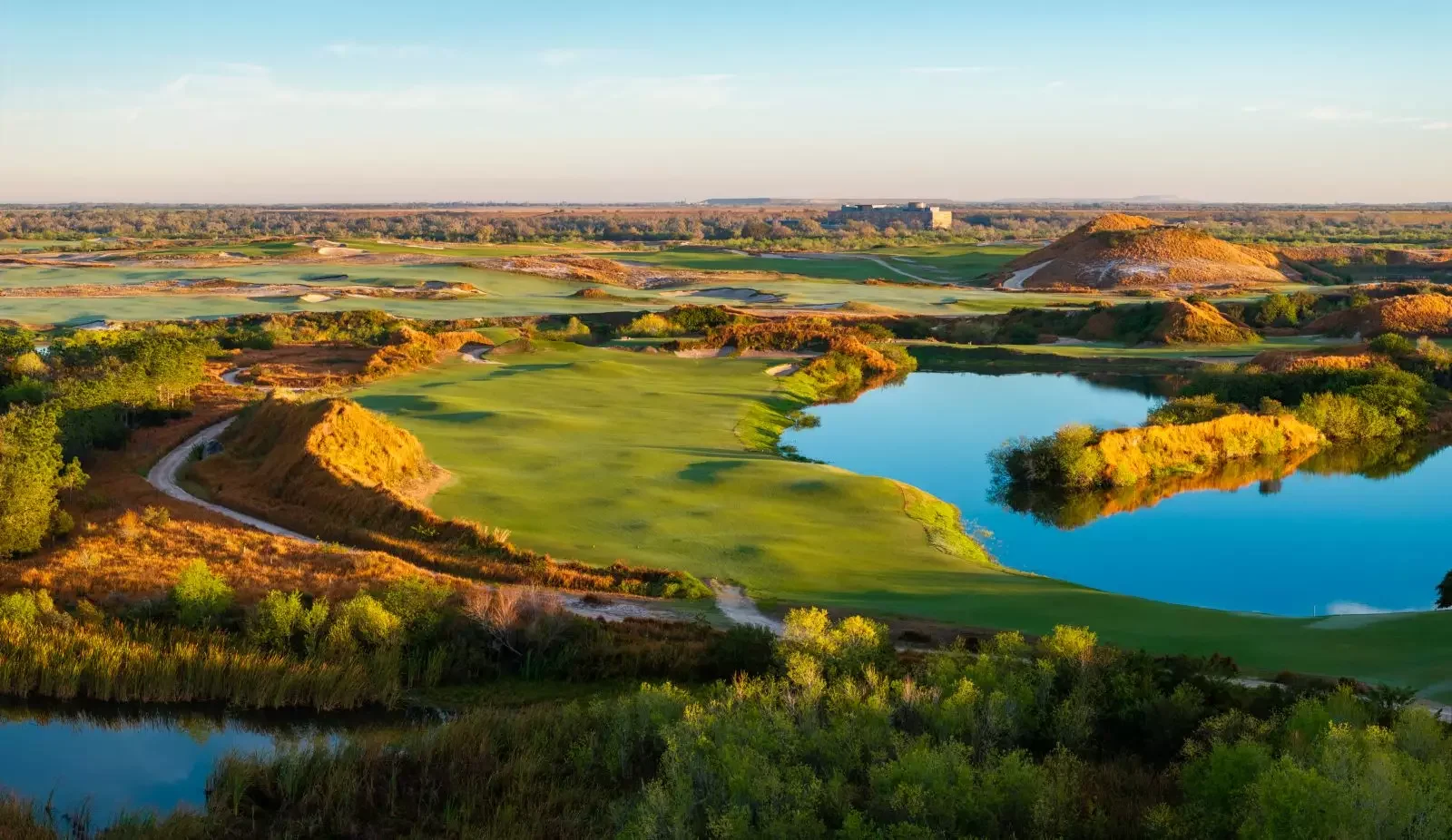
Returning to American Dunes by Terry Moore

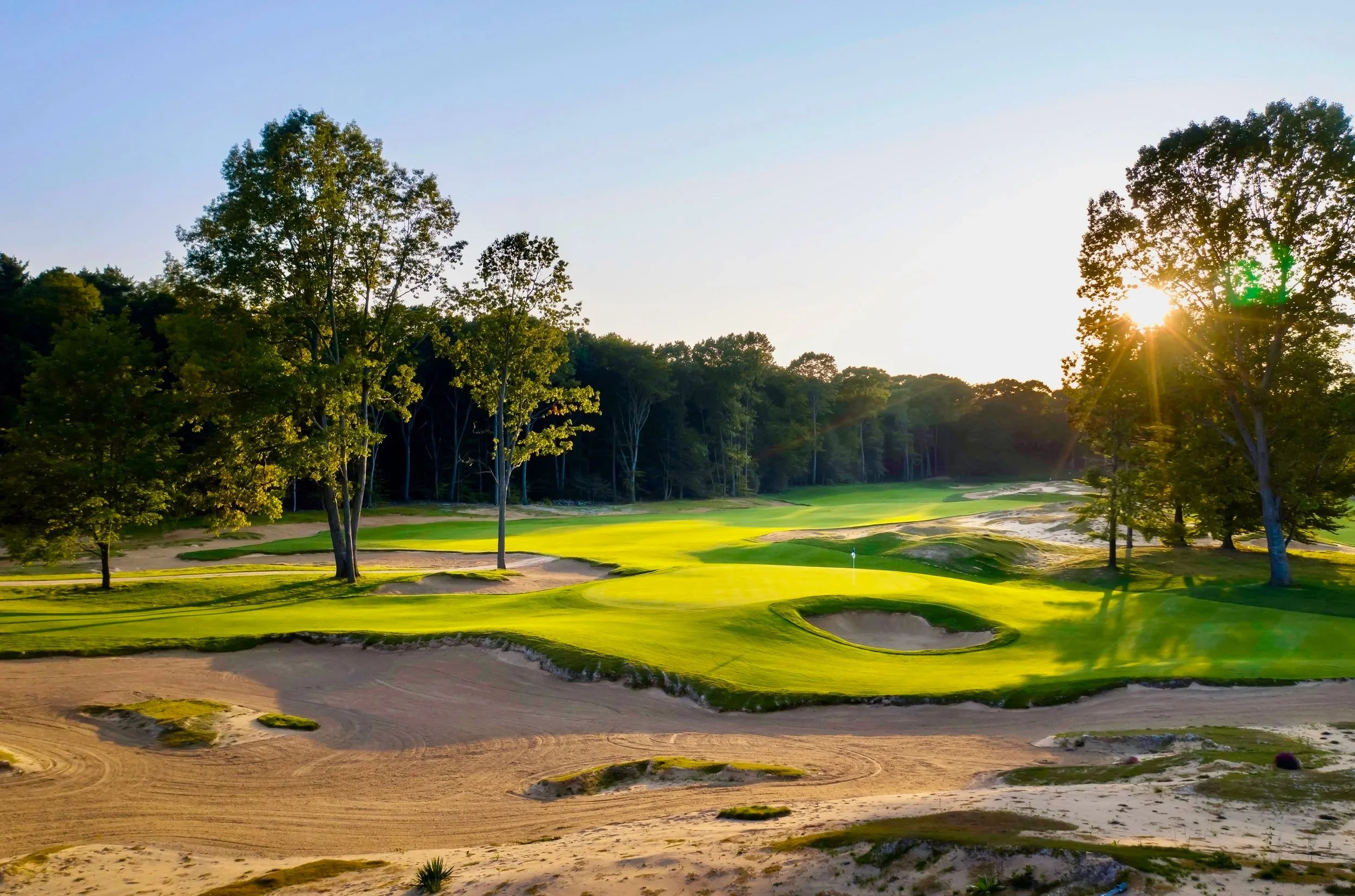
(Grand Haven, MI) It’s been over a year since I last played American Dunes, the well-publicized design by Jack Nicklaus over the property once occupied by Grand Haven GC. I played it twice in the quiet and official openings in 2020 and early 2021 and was duly impressed. The exposed sand dunes and massive bunkering rendered a “wow factor” over the once parkland public golf course. When I was growing up, Grand Haven was a “destination” course in Michigan that required accuracy off the tee with tree-lined fairways on virtually every hole.

As background, I played the course with three other golfers, two who were first-timers. As expected, they were impressed with the underlying storyline and patriotic mission of American Dunes. Lt. Col. Dan Rooney has dedicated the course to the Folds of Honor, a non profit endeavor which provides scholarships to the family of fallen military service personnel. The presentation in memorials, plaques, videos and photographs of this cause are thoughtfully done.

In Michigan, Nicklaus is best remembered for his penal designs at The Bear in Traverse City and Bay Harbor in Benton Harbor. American Dunes is much more accommodating and friendly than those tracks. As Nicklaus remarked at the opening, “Those courses were aimed at hosting professional tournaments.” Rooney and Nicklaus wanted a layout more suitable to public play, with open fronts to greens and less movement in the greens.

And by and large, American Dunes delivers a less demanding golf experience although it’s far from easy. The myriad bunkers, waste areas and some elevated green complexes require one’s “full attention” as they say on the tournament telecasts.

It’s also a walkable layout, a trait I always appreciate although most customers take a cart. But the option is there and I’ve done it twice and really relished it. Our foursome played two different sets of tees, the Freedom tees at 6131 yards and a hybrid of the Valor/Freedom at 6381. It was a smart choice and made it a better day. Be sure to ask the starter about the hybrid option.

Our group liked how the course opened up on the opening nine with the testing downhill par-three fourth hole. Usually into the wind, the hole requires a well-struck shot to find the green, guarded by a large bunker and run-off areas.

Likewise, on the back nine, the second shot of the shortish par-four 11th hole reveals the breadth and reach of the dunes-and-bunkered landscape.

American Dunes really doesn’t have a weak or poor hole. Some may quibble about the starting hole with its somewhat unkempt look and unsightly power lines, but at least it gets play moving, a prerequisite in my playbook.

One of my playing partners thinks highly of the reachable par-five 18th hole, essentially the old 9th hole at Grand Haven. At 500 yards, he hit drive and a three-iron to one foot past the flagstick, just missing an albatross but still a kick-in eagle.

Afterwards in the bar, our group talked about the round and all readily agreed they’d love to play it again. In particular, the course conditions and greens were excellent with putting surfaces stimping at 11. Players who frequent courses of the ilk of American Dunes want and expect slick greens. There were some comments on the softness of the bunker sand, which proved troublesome. Firmer would be much better. The Nicklaus team says they will firm up with watering so that’s a work in progress. Lies in waste areas can be improved via a local rule. Overall, some of the course’s apparent difficulty will ebb as one becomes more familiar with it.

There were some shared concerns with the intersection of the par-3 15th hole and the par-4 16th hole. The green site of the former and the teeing area of the latter pose a risky congestion. The cart path on the 15th leads directly toward the tee of the next hole. Unfortunately, an alternate cart path on the other side of the green lacks room to avoid this situation.

There was also consensus that the tough 16th hole, deservedly the no. 1 index hole, would be a better served with a softer green, one that would accept and collect the required long iron or fairway metal into the green.

Considering the many changes taken at Nicklaus’s beloved Muirfield Village and even at Augusta National GC, it’s hoped Nicklaus and Rooney remain open to tweaking certain holes to make it even more inviting and playable.

Opening the lid on the suggestion box for American Dunes, we did wonder why only a single tee marker per tee is used. Course officials say they wanted to be different. But It seemed strange and it actually doesn’t conform to the USGA definition of a teeing area where two tee markers are required. We received no alert on this oddity from the starter.

And as a smaller suggestion, the nice practice area needs a bucket of water and towel to help with cleaning clubs. And since the range is far from the clubhouse, a clock would be helpful to keep players on schedule.

But the big takeaway about American Dunes remains upbeat and favorable. I’m particularly happy knowing a course the quality of American Dunes is less than an hour’s drive away.

For more information about American Dunes, visit https://americandunesgolfclub.com

Forest Dunes GC: Play and Stay by Terry Moore

“Let’s play two!” Yep, that’s what Chicago Cubs’ Ernie Banks always urged in joyful fashion around the baseball diamond, admittedly in the bygone days of doubleheaders. But if Banks ever plays Forest Dunes Golf Club—a diamond in its own right—he’ll be singing the same tune. “Mr. Cub” would undoubtedly say, “You’re cheating yourself by only playing it once.”

Unless your home address is a cave, you’ve heard and read of the glowing reviews about Forest Dunes, located in Roscommon in northern Michigan, a few miles west of I-75 and Grayling. Earlier this year, the Golf Channel’s Matt Ginella listed the Tom Weiskopf-design as one of his “Top Ten Public Courses in the U.S.” For positive press, that’s sittin’ in high cotton. But heck, smart Michigan players have rated Forest Dunes one of the best for some time, in spite of several ownership changes over the years. Now the rest of the country is just catching up.

Okay, so what makes this place worthy of a Banks doubleheader? Let me count the ways, besides just two:

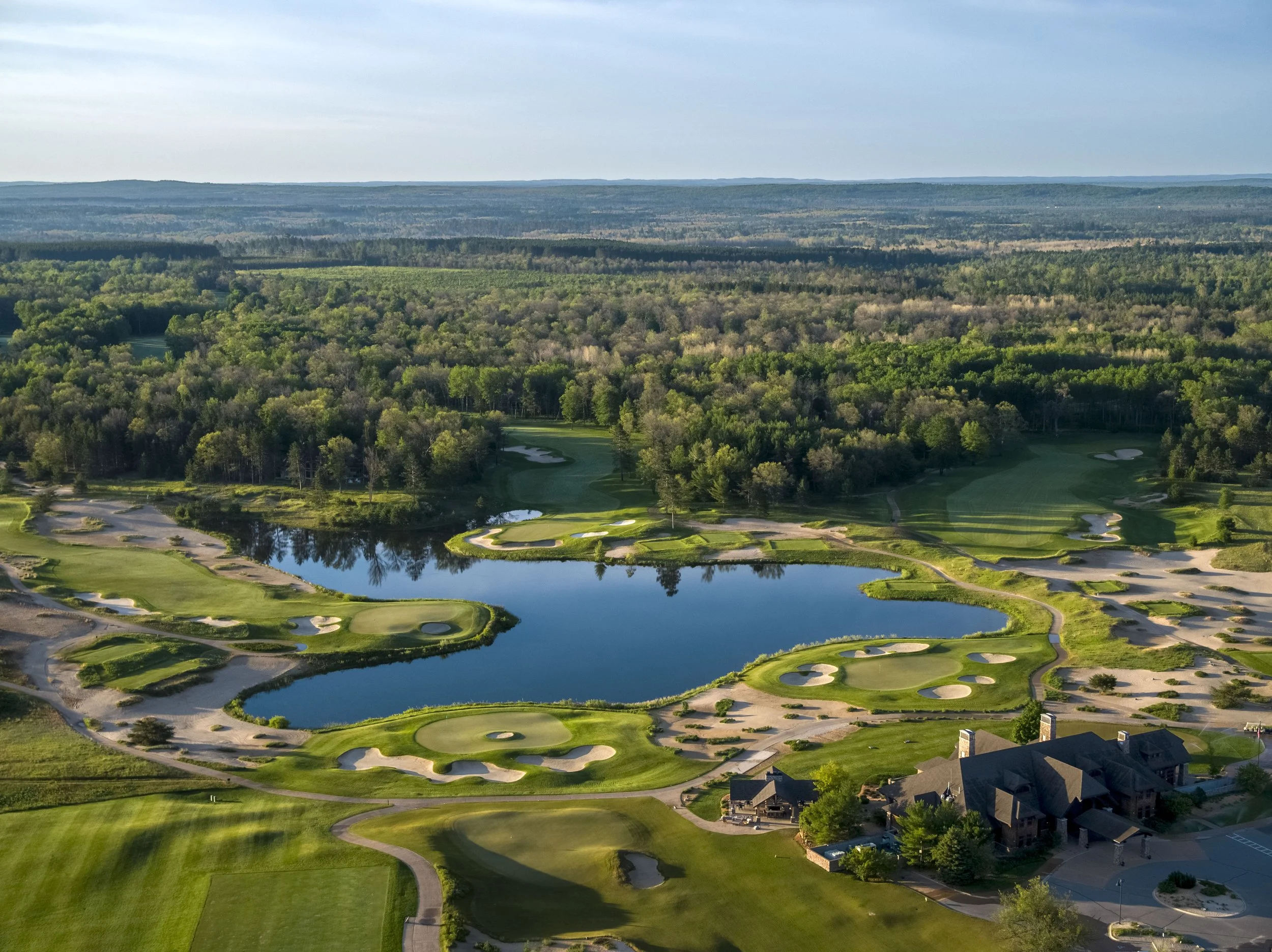
Natural Beauty: Set within 500 acres of the Huron National Forest, Forest Dunes’ remote and isolated location is also one of its most captivating features. Far from the madding crowd, it offers a peaceful yet eye-opening golf experience.

Its expansive landscape is marked by hardwoods, red and jack pines, native dunes, ponds and open meadows—the epitome of Pure Michigan and all its allure. The wildlife is noteworthy too. In a recent visit, I was mesmerized by the sights and sounds of a pair of snowy white Whistling Swans that flew over our heads while on the 12th green. With a splash, they touched down in a nearby pond, all the while imparting a mellow bugling call worthy of its own Pandora channel.

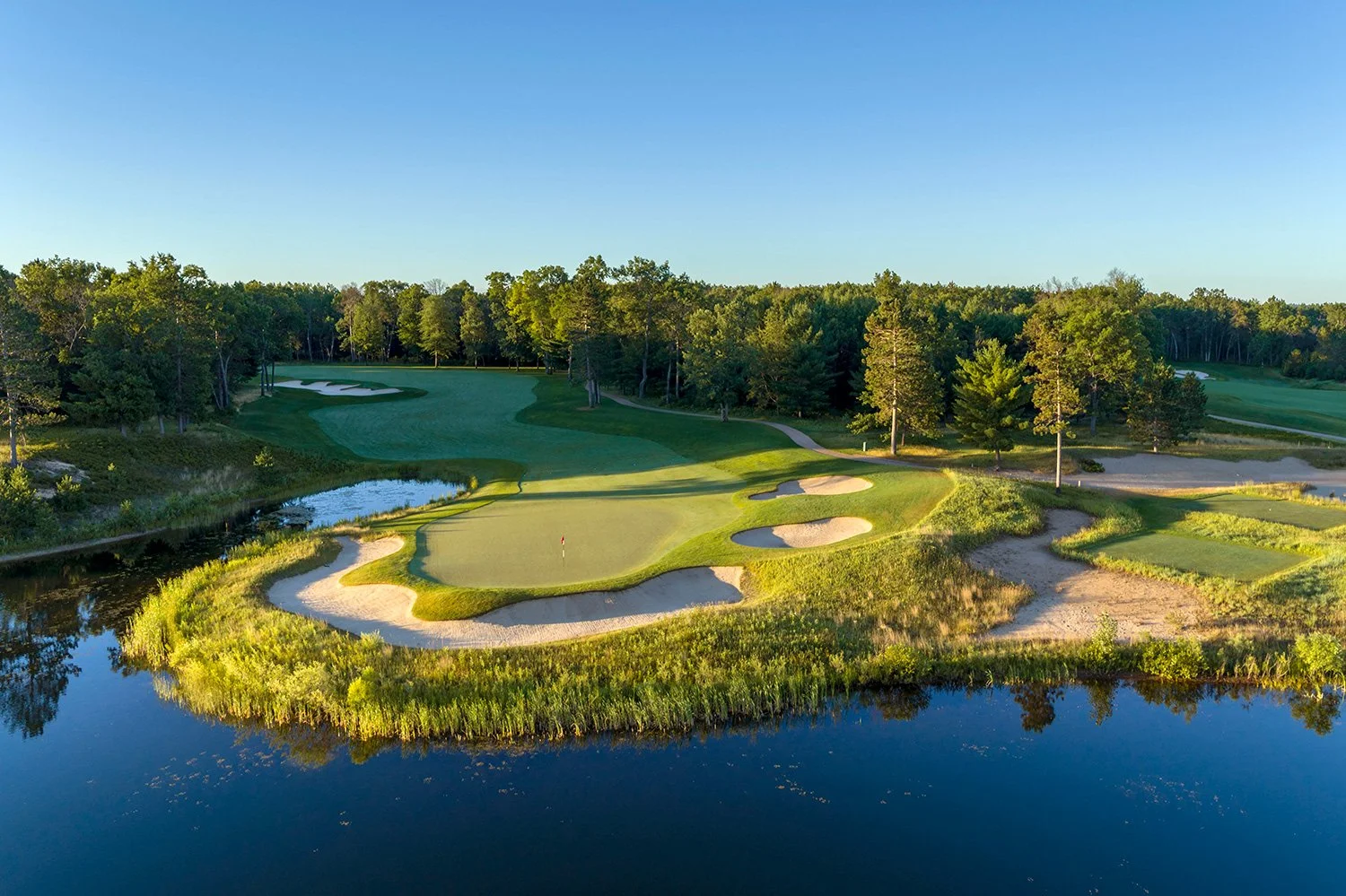
Design: Tom Weiskopf really delivers the goods. The variety of holes, shot values and risk/reward options therein are superb. The front nine is more of a parkland layout with fairways carved out of hardwoods and pines but with generous corridors, including the rough line. In spite of its woodsy environs, one’s driver never becomes claustrophobic. There’s ample room off the tee. The same is true for the back nine which is more open and has a linksy look and feel with prominent sandy waste areas. And both sides offer holes with open approaches to the green and with few forced carries. (I do wish the par-3 ninth hole had an optional forward tee somewhat near the first tee to skirt the water. Oh well.)

In short, you can largely play Forest Dunes on the ground in keeping with classic design. Although there are many impressively-designed bunkers dotting the layout, they can be avoided with accurate shots and if not, they’re not too penal. The right balance of enjoyment and challenge can also be found on the putting surfaces. There’s movement in them but nothing ridiculous or chagrin-inducing. One pro shop suggestion: Please make available a printed copy of Weiskopf’s hole-by-hole playing tips as a helpful guidebook.

Conditioning: Course Superintendent Jim Bluck, a highly regarded GCSAA member, has been with Forest Dunes since it opened more than a decade ago. Such tenure is testimony to his mettle, skill and experience. Sporting a single digit handicap index, Bluck knows the nuances of the game and what conditions are most desirable to the Forest Dunes golfer: smooth and fast greens, firm fairways, ample sand in neatly trimmed bunkers, manageable rough and most importantly, an attention to detail. Most players seeing the top-shelf conditioning standards here are respectful of good course etiquette—fixing ball marks and filling divots. But given the state of the game, an irksome minority always lurks, being too lazy or too ignorant to do such tasks. Thankfully, Bluck’s staff fills in the gaps, most notably with a monitored divot replacement regimen. The end result: It’s one of the best conditioned upscale courses you’ll ever find.

Facilities: The big news in 2013 is the opening of the 14-room Lake AuSable Lodge overlooking the first tee and Lake AuSable. The Lodge answers the growing need for more on-site lodging that previously was limited to some rental cottages and homes on the property—both of which still provide very attractive housing. Now couples, buddy golf groups and other parties can take advantage of these well-appointed rooms with comfy bedding, flat screen HD satellite TV, and wireless internet. But the catbird seat at the Lodge may be found on the second level, where a duo of handsome two-bedroom suites resides with a fireplace and a life-is-good balcony. A few steps away sits the spacious and finely furnished Adironack-style clubhouse. Its Sagamore’s Restaurant is just another reason to stay on the property and not break the spell of a memorable golf experience.

And these added pluses: Wide, stamped concrete cart paths; a big, two-sided practice area; attentive and friendly service (the bag drop attendant actually ran to get my bag out of the car!); buffet breakfast for morning golfers; combination tees on the scorecard; walking allowed any time (bravo!); a 19th Bye hole; gratis from the starter, natural bug repellent (the insects can be pesky at certain times); and the fire engine-red Club Cars that are so striking and distinctive when seen from afar. Psst: the red matches the team color of the U. of Arkansas Razorbacks, the favorite of Forest Dunes’ new owner, trucking mogul Lew Thompson from Huntsville, Ark.

With Thompson’s support and trust, Todd Campbell—the golf and customer-savvy General Manager of Forest Dunes—has the operation clicking on all cylinders. A PGA member, Campbell spent twenty years at Garland before arriving at Forest Dunes following a short stint at a Wisconsin golf resort. Campbell is back home again, seizing the challenges of the marketplace and relishing what the property represents to Michigan and to destination, bucket list golf. Self-effacing yet confident, he knows Forest Dunes is on the right path.

Just don’t expect him to blow his own bugle. Leave that to the Whistling Swans.

For complete information about Forest Dunes, visit its comprehensive website at www.forestdunesgolf.com

Losing one’s phone, getting out of sunbelt’s heat and a fall golf trip to Forest Dunes by Terry Moore

Here’s a sure-fire way to meet people at a busy golf resort: lose your cell phone and start to panic.

That happened last week while I was on a buddies fall golf trip to Forest Dunes in Roscommon. I’ll get to golf in a moment which, as expected, was terrific, but the episode with my missing phone was quite revealing on several levels.

After our foursome completed our round on The Loop, Tom Doak’s ingenious and, at times, diabolical reversible layout, we headed to Bootlegger Bar. It’s a smartly done and covered outdoor area that overlooks Forest Dunes’ traditional “Bye Hole” and the starting and finishing holes of the popular Bootlegger 10-hole short course.

After settling wagers and claiming the usual excuses, we hung out at the bar and caught up on emails and texts on our phones—those pesky tethers of modern life. Meanwhile, other golfers arrived on the upbeat scene as the morning tee times came in.

Along the way, I got up to chat with Don Helinski, Director of Operations for Forest Dunes, a long-time colleague of Michigan golf. He had been talking to some women who were part of a large group of golfers outside Michigan on a stay-and-play package at the resort. Don told me that out-of-state play represents at least half of Forest Dunes guests. Given the continued high rankings and positive reviews for the resort and the course designs by Tom Weiskopf and Doak, this didn’t come as a big surprise. And it certainly reinforced the opinion that northern Michigan golf remains ever attractive on a national and regional scale. 

Afterward, I returned to where I was sitting and realized my phone was missing. After frisking myself, looking around and under the bar, and asking the friendly bartender for leads, I asked my cronies to call my number—that last-gasp measure of senior cell phone desperation. No response; no pick up. They kept calling to no avail. Then I remembered I probably muted my ringer as I usually do on the course. Where in the blazes was it? It naturally became a hot topic of conversation at the bar because it happens to most people.

Just when I thought this idyllic golf getaway with buddies was officially off the rails and disrupted by a lost phone, suddenly, I saw a woman running back to the bar from the second tee of the Bootlegger. And glory be, she was carrying two phones, one of which was mine.

“I’m so sorry. Thinking it was mine, I picked it up at the bar,” she confessed. One of my pals couldn’t resist retorting with a laugh, “What a pick-up line, Miss!”

The contrite and congenial culprit turned out to be Sue C., a PGA teaching pro from New York who was part of that group staying at the resort, as indicated by Helinski. As I later learned, this gathering of four foursomes was an annual fall golf ritual.

The common ties were Innisbrook Golf Resort in Tampa, Florida, where most of the group had winter or year-round homes, and Connecticut, another domicile for many.

Beginning a dozen years ago, they alternated between playing at Innisbrook or Lake of Isles at Foxwoods Resort in Connecticut. Then, the group branched out to new destinations, including Pine Needles in Pinehurst, NC, Turning Stone Resort in NY, and Hammock Beach Resort (then managed by Innisbrook) in FL.

So why Forest Dunes in Roscommon? Another PGA teaching pro in the group—Dawn from Innisbrook—had been to Forest Dunes before and recommended it. (Incidentally, Dawn had an ace the day before on The Loop.) 

Another clincher was this: “Some of the Florida and southern girls wanted to get out of the heat. That was probably the number one reason,” said one of the golfers. “And we loved it here. Great golf, accommodations and an overall fun time together.”

Despite my brief and comical panic episode over the missing phone, our foursome felt the same. Here are a few added takeaways about Forest Dunes:

The Bootlegger short course is a winner. For upscale destination golf resorts, a walkable short course has now become a “must-have” amenity. Kudos to designers Riley Johns and Keith Rhebb for delivering an entertaining collection of short holes ranging from 50 to 140 yards. Our foursome, like most, grabbed a handful of clubs in one hand and a light libation in the other. In a neat touch, speakers are deftly placed throughout the course, pumping out upbeat music to complement the laid-back vibe.

The Tom Weiskopf-designed Forest Dunes layout always pleases. It’s challenging but fair without a weak or odd hole in the mix. The variety of holes and the shots required are thoughtfully rendered. And its bunkering is majestic. Before he passed away two years ago, the World Golf Hall of Famer Weiskopf proudly said Forest Dunes was one of his top ten designs. As often noted about Weiskopf’s swing, the course is both elegant and powerful.

The Loop is an amazing design by Tom Doak. I’m still baffled at how he and his team pulled off this reversible course where golfers play it clockwise one day and counter-clockwise the next. Doak observed the concept years ago when he traveled and played in the British Isles. Several courses were designed to be reversible to relieve divot areas. The veritable Old Course at St. Andrews occasionally reverses itself and is played clockwise. With tight, bouncy turf and fast, demanding putting surfaces, The Loop can be like minding an unruly child at an amusement park. Hold on, stay alert and try to have fun. Instead of medal play, it’s best to play Stableford or match play, where if you’re out of the hole, pick up and move on. 

A special shout-out to the superintendents and their staff at Forest Dunes, particularly John Wessels, who oversees the Forest Dunes course, and Rob Falconer for The Loop and Bootlegger.. The resort’s turf conditions and greens were consistently of a top-notch quality, enhancing the playing experience.

One final note: if you lose your phone at Forest Dunes be patient and don’t sweat it. You’ll soon enjoy meeting a small village of people.

Streamsong, the Blue Course by Tom Doak

There’s a truism in critique circles that when reviewing a restaurant, a film or even a golf course, one should sample them twice before making a final studied opinion. If reviewing a high quality golf course destination, that’s especially sound and fair-minded advice because one can catch even the best resort on a bad day, service-wise, or miss something integral in a layout’s design.

However, I must confess that wasn’t my rationale for returning to Streamsong, the highly acclaimed and well-publicized golf resort tucked away in north central Florida. Last April, I loved the place at first glance. (Insert link here) I marveled not only at the property itself, but the creative and expansive thinking that propelled the entire project.

On the way to the Masters, I only had time last year to play the Blue course, designed by Michigan’s Tom Doak, The Blue course provided an exceptional golf experience dampened only by a slew of three-putts. The demands of the greens were challenging especially with tough pin placements that day. However, they were somewhat offset by wide, generous fairways and frequent open approaches to them. And Doak’s trademark minimalist design philosophy—an artful discovery and shaping of natural land forms—was impressively on display.

The advance scouting book on the Red course, designed by Ben Crenshaw and Bill Coore, was that it was less forgiving off the tee than the Blue but was more benign around and on the greens. In sum, that’s a fair and accurate assessment. Unlike the Blue, the Red starts off with a jolt as the first two holes are the no. 4 and no. 2 handicap holes. Yet, they didn’t bother my brother-in-law who parred the first and birdied the second and was net three-under par for the day.

I particularly liked Red holes 7-8-9 and how they offer a string of good scoring chances with a shortish par-five, a short par-three and a short par-four. After posing a tough start, Crenshaw and Coore eased off the pedal, letting players relax a bit as they end the front side. As one of the Streamsong pros aptly described the trio, “They’re favorites because they allow players the chance to score but they’re not pushovers.” Those words proved prophetic as I birdied the 119-yard 8th hole while two of my playing companions carded doubles.

The par-three 16th hole also got our admired and undivided attention. It’s a companion “signature hole” to the Blue’s par-three 7th hole which sits near by and in parallel fashion. With an elevated tee and a daunting carry over water and huge bunkers, we played it at 184-yards and no one’s tee ball found the putting surface. The designers allowed for an ample bail-out area left of and below the green but it required a deft chip or Texas wedge to make par. Overall, the Red’s 16th matched the Blue’s 7th as a scenic yet ornery test.

Last year, I was given a cart tour of the Red and I noticed its turf quality was not as mature as found on the Blue. This was due to the fact that its first six holes were the last to be grassed during construction. Now a year later, I can attest the conditions now match the quality of the Blue. In spite of a heavy downpour the day before, the Red’s turf remained firm and tight and offered a linksy bounce and roll.

Okay, at this point in the proceedings you’re ready to say, “Yeah, yeah, but what do you think about the playing experience of the Red? Does it complement the Blue?” Cutting to the chase, the Red and the Blue are worthy companions and each delivers a stirring golf journey requiring imagination and solid shotmaking. And they’re best experienced on foot and with a knowledgeable caddie at one’s side. (Our caddies were all excellent and provided good lively banter.) In today’s travel parlance, these fraternal twins are meant to attract the “big game hunters” ever bent on tracking down the rare, exotic and most select layouts. The courses are different in subtle ways but they’re congruent in their thoughtful and deft use of the landscape.

Three pieces of advice before playing Streamsong: 1) Like all luxury items, expect to pay a premium here but then get over it. Treat the experience as something special, like fine dining or great seats at a concert. 2) Don’t get too score-conscious and allow numbers on a card to ruin your round. Play match play or a form of Stableford where high scores can be more easily accepted and dismissed. 3) Don’t be too hurried or rushed but play briskly and with dispatch. Heeding advice no. 2 will help in this regard.

If you do none of the above, that’s okay, too. Just get there.

A brief commentary about the hotel at Streamsong. Last year, I was blown away by its singular and minimalist design and thematic attention to detail. In my view, the hotel broke the mold and set a new standard for golf accommodations. After a return visit, that’s still my opinion and I’m sticking to it. On this visit my wife joined me and since she didn’t play golf we took the opportunity to experience the Streamsong spa called AcquaPietra (Water Stone). And were we ever ready for it. We arrived after a long day in the car, including several hours handling heavy Orlando traffic in a rainstorm.

AcquaPierta, located on the lower level of Streamsong hotel, is a tranquil and elegant space in a manner of a European grotto sanctuary. Masterfully designed by Alberto Alphonso, it’s reflective of his themes and philosophy behind the entire architecture and space at Streamsong. With lower and soft lighting, it imparts a calming and comforting ambience with minimal distractions. There are nine treatment rooms and six different pool experiences along with sauna and steam rooms. The facility more than met our expectations. Possibly the only shortcoming was with the men’s and women’s locker rooms. They’re well-appointed but are somewhat small and cramped for space. One hotel guest grumbled to me about the room only offering one shower.

But neither my wife nor I grumbled about the therapists who expertly provided us with deep muscle massages. They were congenial, knowledgeable and highly effective in their craft. After a 90-minute visit to the spa, those tight neck and back muscles disappeared—like the memory of that Orlando traffic—and we felt rejuvenated. AcquaPierta delivered on its promise.

Firestone GC, North and South

This year I checked off a golf bucket list item. I finally played the North and South courses at Firestone CC in Akron, OH. Due to some special family memories, I’ve wanted to play these courses for a very long time. You see, My parents took my brother and me to our first major professional golf tournament, the 1960 PGA Championship at Firestone.

All the major players of the day were there—Arnold Palmer, Sam Snead, Ben Hogan, Ken Venturi, Doug Sanders, Dow Finsterwald et al. We couldn’t get enough of the action, watching these larger than life figures play the game. The course itself was magical, with lush green and trimmed fairways, yawning bunkers and huge rolling greens. And at that time, before the Dutch Elm disease decimated the property, it was also a heavily tree-lined layout. Now 60 years hence, the trees are again prominent over the landscape.

No longer strictly private, Firestone CC is open to corporate and individual play for those willing to pay for the privilege. Considering its history, impeccable conditions and amenities, it’s more than worth the price.

Adding to the experience, we played with a long time member, Gale, who I met playing golf over the winter in Naples. Gale’s a good player and thoroughly knows both courses. He also wisely suggested the set of tees that best suited our games. Like most championship courses, Firestone, North or South, is best played forward and within one’s normal length of yardage.

A little background, first.

In 1929, Firestone’s South course was designed by Bert Way, an English-born golf professional who had moved to Detroit where he started laying out courses in Michigan and Ohio. As a footnote, Way also taught golf to John D. Rockefeller. Henry Firestone hired Way and he delivered a par-71, 6620-yard test. The course would host six Rubber City Invitationals, attracting the game’s best players to Akron.

But the South course at Firestone earned the right to host the prestigious 1960 PGA Championship after a major renovation by Robert Trent Jones, Sr. He added 50 bunkers, two ponds and stretched it to 7,165 yards at par-70. Akin to Oakland Hills CC in Detroit, it was a beast. In fact, the winning score for that ’60 PGA won by Jay Hebert was 281, one-over par.

Today, Firestone is still a championship test and if your game is awry the troubles and doubles will add up. But if you drive the ball well and keep it in the fairway, one can score here if—and it’s a big if—your touch around the greens is deft.

Jones’ trademark design of long horizontal tees— allowing for flexibility in tee locations as well as lessening wear— are evident here.

What made playing the South so enjoyable was retracing the historic shots seen over the years. Tiger’s commanding wins, including one in near darkness, were brought up several times as was Nicklaus’s amazing par one year at the iconic par-five 16th hole. It was my favorite hole on the course because three good shots at the right angles are needed to find the putting surface.

As much as I enjoyed the South course, the North course proved to be even more of a treat. Gale said it was favored by his regular weekly group for its overall playability and pleasant views. I readily agree.

The North course, designed by Jones, Sr. in 1969, is noted for its ponds and lakes and rolling terrain property across the road from the main clubhouse. It has hosted an American Golf Classic PGA Tour stop as well as a World Series of Golf tournament.

Like the South, the layout was in pristine condition. The greens rolled fast and true and with enough movement in them to require one’s full attention. First timers really need a good caddie or a savvy member like Gale to help in reading them. Yet they’re tamer than those found on the South.

Jones was masterful in designing several holes around water, a notable feature of this excellent course. The par-3 11th hole particularly stood out. It demanded a stout iron from the white tees at 162 yards, traversing over a lake to a well-bunkered green. Likewise, the 17th is another one-shotter, downhill over water to a big green. A very scenic hole to boot.

Capping it off is the par-five 18th hole, a beguiling dogleg around the lake. Like the 16th on the South, this hole embodies the “heroic design” philosophy made famous by Jones throughout his storied career. You need to know the best route off the tee and on subsequent shots to make par or better.

Playing the North and South courses was a delight, conjuring up fond memories of when I first stepped on the grounds in 1960. Despite their challenges, it made me feel like a kid again.

Note: Now owned by ClubCorp, Firestone offers a stay-and-play package which includes on-site lodging and dining as golf options at all three of its courses, including the Tom Fazio-designed West Course. Prices vary with time of year but the post-aerification period after mid-October is a smart choice.

For more, information visit www.invitedclubs.com

Kent County Club: A Treasure Trove of History by Terry Moore

As Michigan’s oldest golf club (1896), and one of the oldest in the Midwest, Kent CC in Grand Rapids offers a treasure trove of history and special highlights from the past 107 years. In chronological order, here are my 18 favorite things you should know about Kent Country Club, its roots and its members:

1. The idea of a golf club for Grand Rapids originated with founder Edward Lowe, a successful financier and business owner, who first heard about the Scottish game from a fellow passenger on a transatlantic ocean liner in 1895. He then visited St. Andrews, Scotland and the Royal and Ancient Golf Club and was immediately impressed with the game and its growing popularity. A year later, Lowe and a group of friends formed the Golf Club with Lowe as its first president.

2. The original property of the club was at the corner of Wealthy and Plymouth streets in East Grand Rapids overlooking Fisk Lake. (Today, it sits across the street from Spectrum Blodgett Hospital.) It was a nine-hole course on a leased parcel and shared the clubhouse of the existing Country Club which offered tennis, archery, croquet, a boathouse and swimming beach. The original nine-hole, par-27 course was designed for $25 by Chicago Golf Club’s golf pro Jim Foulis. Born in St. Andrews, Foulis was one of the eleven players who took part in the first U.S. Open in 1895, and he came in third. The next year, he won.

3. Christened the Grand Rapids Golf Club in 1897, the officers wrote Tom Morris in St.

Andrews and asked him for recommendations for a golf professional and teacher. The club decided on David MacIntosh who arrived from St. Andrews with fellow Scotsman and designer Donald Ross to improve the course. With an additional ten acres and new greens, the new nine-hole course represented a walk of a mile and a half and at the time was deemed one of the best in the country.

4. Wanting a larger golf course, the club, now renamed Kent Country Club to broaden its appeal, relocated to its current site in Grand Rapids in 1901. Originally, it was a 129-acre dairy farm of Martin L. Sweet, a successful businessman in the latter half of 1800s. (Incidentally, today a small city park—named Sweet Park—abuts the driveway to the Maintenance Department of the club.)

5. One of earliest members of the Western Golf Association (1899), several key KCC members in late 1903 traveled to Chicago and the WGA and offered to host and sponsor the 1904 Western Open. A harbinger of sports marketing, the offer was made to bring added publicity and recognition to the club. Truly a major golf championship in its day—holding its own with the U.S. Open—the Western Open was bid on by other clubs in St. Louis and Kansas City. Largely due to amenities offered by the GR Boat and Canoe Club and the GR Automobile Club, KCC’s bid was accepted.

6. In June 1904, 32 golfers, including four amateurs, traveled to Grand Rapids and KCC for the Western Open and its purse of $400. With scores of 78-76-77-73, 24-year-old Willie Anderson of Rye, NY, won by three shots over his archrival and defending champion Alex Smith. Anderson claimed $150 (nearly $4000 in today’s dollars) and his second Western Open title which nicely matched his two National Open (as the US Open was then commonly referred to) titles. The following week, Anderson won his third of four National Open crowns.

7. Although the 1904 event at KCC was generally well-received by players and supporters alike, critical remarks written by Chicago InterOcean newspaperman Joseph E.G Ryan caused a stir among KCC members. In a column, he blistered the course for its lack of bunkers and wrote that the existing hazards of a windmill, fencing and its famed earthen mounds along the 17th hole were better suited to a “humorist” than a golfer. Embarrassed, the club within three years removed the windmill and fencing while adding several bunkers and numerous trees to the open linksy expanse.

8. The inaugural Michigan Amateur in 1906, conducted by the Michigan Golf League, was held at KCC and was won by Saginaw’s James Wylie of Saginaw who defeated member Phil Stanton. Stanton turned the tables on him the next year, defeating Wylie in the finals at Wylie’s home club, Saginaw CC.

9. Buoyed by its course improvements, KCC hosted its second Western Open in late June 1911. It again attracted the best players—pros and amateurs—in the Midwest and beyond. After 54 holes of medal play, the four low players paired off in 36-hole matches. Kenosha’s Bob Simpson beat Boston’s Tom McNamara in the finals, 2-up. Unlike in 1904, the press was universally pleased with the course, the member hospitality and the gallery.

10. 1911 was a banner year for the club as President William Howard Taft—the first sitting President to play golf while in office—visited the club and made a speech inside a packed clubhouse. Afterwards, he stepped outside in a hard rain and wind and hit two drives off the first tee. Only the sour weather prevented him from playing a round.

11. In 1914, Kent hosted its first Western Amateur, one of the premier championships in the nation, and attracted a stellar field including: 56-year-old George Lyon, the ’04 Olympic champion held at St.Louis; Pacific Coast champion Jack Neville who later became famous for co-designing Pebble Beach; two-time champion Chick Evans; and Detroit’s James D. Standish Jr. who defeated member Phil Stanton on the 36th hole in the semis. In the finals, Evans thrashed Standish 11 & 8, a Western Am record that held up for the 36-hole finals mark until 1960. Evans went on to a Hall of Fame career and in 1929 asked the WGA to establish a caddie college scholarship in his name. A four-time Michigan Amateur champion, Standish served as President of the USGA from 1950 to 1951, and again from 1952 to 1957 and founded the U.S. Public Links Championship in 1922.

12. In 1923, Kent hosted the Michigan State Open drawing sixty players to the 72-hole medal play event. Rochester’s Harry Hampton, with a final round of 68, finished at nine over par for the week, three shots better than Redford’s Dave Robertson. In the separate Michigan State Amateur, Ann Arbor’s Carleton Wells defeated Lansing’s B.L Hewitt Jr. in 40 holes.

13. In 1924, the Michigan Women’s State Championship was held at Kent. It was won by defending champion and Detroit’s Harley Higbee who beat 17-year-old Virginia VanWie on the first hole of sudden death.

14. With a record field of 200 players, the Michigan Amateur returned to Kent for the final time in 1928. Ann Arbor’s John Malloy won his second of three consecutive titles by a scorching 12 & 11 margin over Detroit’s Howard Lee.

15. The largest golf gallery in GR history—3500 spectators—swarmed over Kent in 1942 to witness an American Red Cross/USO benefit exhibition featuring Bing Crosby, Jimmy Demaret (1940 Masters winner), Michigan Open champion Chick Harbert and Oakland Hills pro Al Watrous (formerly a pro at nearby Highlands CC) who was a last minute substitute for an ailing Byron Nelson, the reigning Masters champion. The team of Harbert-Watrous won 1-up over Crosby-Demaret when Watrous holed a 35-foot putt on the 18th green. For the day, Demaret shot 69, Watrous and Harbert shot 71 and Crosby carded 78, incurring an OB and taking a seven on 15.

16. A Kent member since 1941, Gerald R. Ford married Betty Bloomer in 1948 and they held their wedding reception at the club. A few weeks later, Ford was elected to Congress, thus beginning a remarkable political career capped off by the Presidency in 1974. Years later, another President and his wife, George and Barbara Bush, played Kent as guests of David and Judy Hooker.

17. 21-year-old Dick Norton, Kent member and a recent graduate of Purdue University where he co-captained the golf team, caused a sensation by reaching the finals of the 51st Western Amateur held at Blythefield CC in nearby Rockford. The youngest finalist since Chick Evans in 1909, Norton reached the last match by beating such notables as: reigning Michigan Amateur champion Reggie Myles; Chicagoan and current Western Junior champion Henry Loeb, 18, who earlier had dispatched Harvie Ward, the foremost amateur of the time; Chicagoan John Levinson by finishing eagle, birdie to win 1-up; and in the semis a 4 & 3 win over the tourney’s medalist Frank Strafaci, a former North & South champion, when Norton played 33 holes in seven-under par. In front of over 4000 spectators, the tall and lanky Norton faced 32-year-old Dale Morey in the 36-hole finals. But Morey’s sizzling eight under par stretch over 29 holes ended Norton’s local hero quest in an 8 & 6 result. Grand Rapids Press sports editor Clank Stoppels summed up the tournament by writing: “It was a storybook week of golf and the one the American public which loves the dramatic touch, will not soon forget.”

18. Well said, Mr. Stoppels. Touching upon the roots of the game in America, its earliest majors and champions, notable state players, guests of honor and members alike, Kent Country Club remains one of Michigan golf’s unforgettable storybooks.

Sources: special thanks to Kent’s superb history, The First One Hundred Years, written for its Centennial celebration in 1996 by Richard Harms. Other sources for this article included the Western Golf Association, the Chicago Tribune, Grand Rapids Herald and the Grand Rapids Press.