A Review of 'The Playing Lesson' by Michael Bamberger by Terry Moore

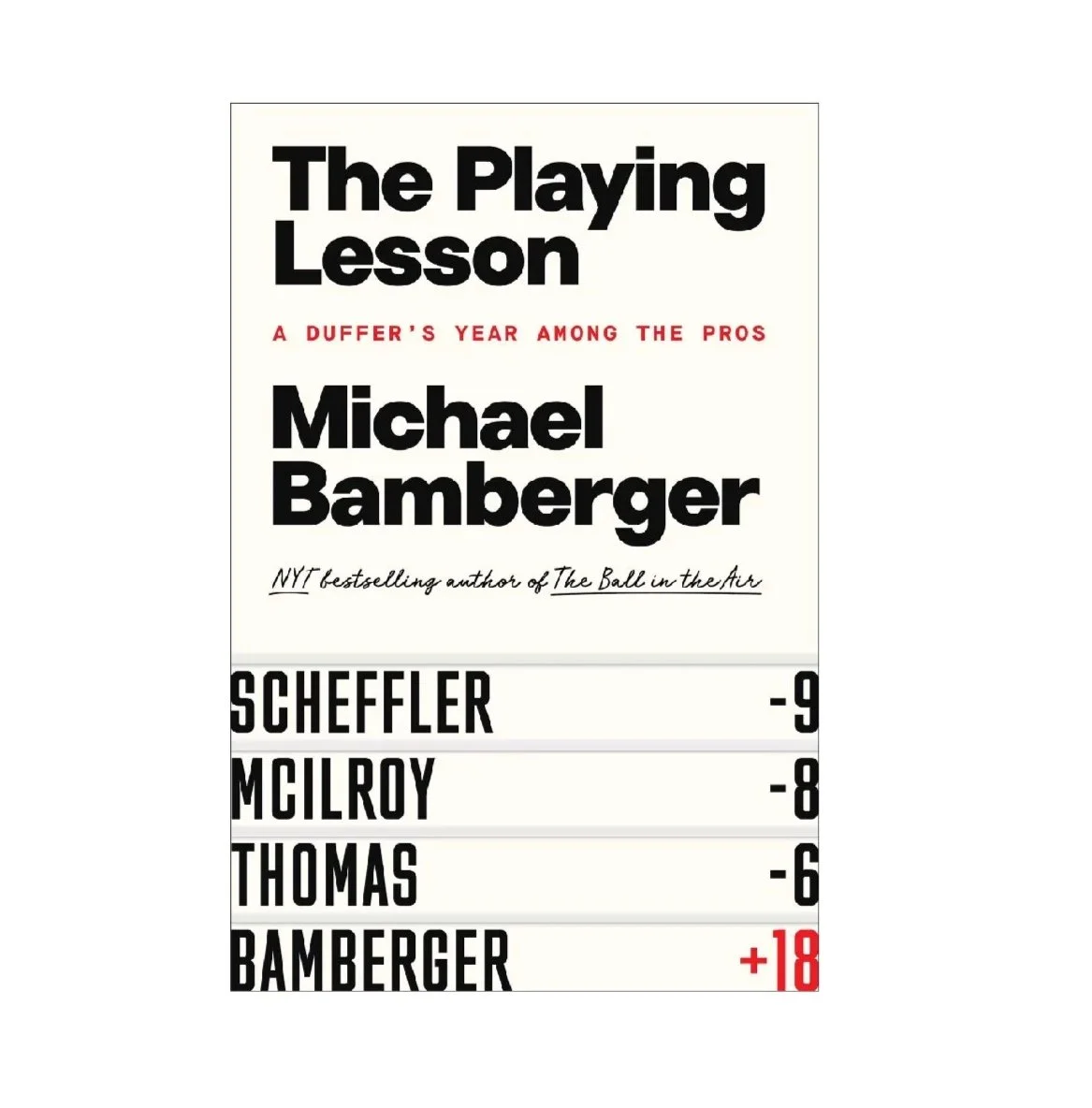
Just in time for Father's Day, a new golf book is out by Michael Bamberger, the award-winning golf writer and journalist who spent 22 years at Sports Illustrated (in its glory days) and is now found at golf.com. Simply put, Bamberger is one of the best golf scribes around. His books are a must-read. After his first book appeared, none other than John Updike, the late esteemed novelist and avid golfer, contacted him and asked to meet him, so impressed was he by Bamberger's tome.

Titled The Playing Lesson: A Duffer's Year Among the Pros, Bamberger delivers a rollicking adventure by playing in various pro-ams across the country in 2024. In the process, he mines nuggets of insights and lessons from a host of names and journeyman pros, insiders, and devotees of the game. The author converses with Lucas Glover, Ernie Els, Jake Knapp (who won his first tournament last season), David Feherty, Brad Faxon, Greg Norman, Tom Doak, Robert Garrigus, his longtime friend Mike Donald, and many others..

Donald, born in Grand Rapids, MI, is a cult-like figure in the game, having played in 550 Tours starting in 1980 and winning once. He's best known for being runner-up in the 1990 U.S. Open at Medinah, where he lost to Hale Irwin in the Open's first-ever sudden-death playoff after being tied in the Monday 18-hole playoff. I covered that Open and was inwardly pulling for Donald, wondering at the time, along with many of my colleagues, why we had to wait 24 hours for a sudden-death playoff.

Early on, Bamberger sets down the motivation for the book: "I'm on a mission, in my life, and in these pages. I'm seeking the wonder of golf, wherever it may be."

He admits to modeling himself after George Plimpton, the celebrated writer of the Baby Boomer generation, famous for his Walter Mitty-type articles and books in which he embedded himself among famous athletes and artists—a forerunner of "participatory journalism." Among golf aficionados, Plimpton is best known for writing The Bogey Man, Plimpton's comical and embarrassing exploits playing among Tour pros for three weeks in 1966.

Like Plimpton, Bamberger is a gifted and facile writer, and unlike Plimpton, he has a much higher golf IQ. (Incidentally, I disliked the inclusion of the inappropriate and lame use of "duffer" in the title.) But they are both equally entertaining.

Here are some of the gems I noted and relished while reading:

In writing about green reading tips, he remembered talking to Lee Trevino about his famous and enormous caddie, Herman Mitchell.  "All putts break toward Herman," cracked Trevino.

Regarding golfers' superstitions, he discovered that Jack Nicklaus wore the same lucky pants all four days to win the U.S. Open in the summer heat at Oakmont in 1962.

President of the USGA, Fred Perpall, offered this advice about those PGA Tour players who left for the LIV Tour: "Let them go. It's hard to confer the value of what you have to people who don't appreciate that value."

About the allure of playing competitive golf, Bamberger writes: "When you're playing a match or in a tournament, the course comes alive, and your opponents do, too; your head gets in it, and so does the rest of you."

Comparing Minor League baseball players versus their counterparts in golf: "Baseball players have to prove themselves to coaches, managers, general managers and owners. In golf, you don't have anyone to approve you…to advance all you have to do, and all you can do, is to shoot the scores."

As someone who has covered a number of Masters, I loved this nifty word picture of some Masters patrons and VIPs seen under the famed oak tree between the clubhouse and the first tee: "It's a gathering place for the embroidered-belt crowd, plus a few lucky stragglers." Priceless.

After conversing with the staffers of the Tour equipment vans seen at Tour stops, Bamberger writes: "The equipment guys, for all their tech, are about the last vestige of the old tour, when the tour was a tour, and your life was on the road."

My favorite quote and one most telling about why certain players make it on Tour and others fall by the wayside, is this one by Ryan French, aka 'The Monday Q guy' who's a maven tracking the journey of Tour aspirants: "The players who make it have a superior ability to identify where they are weak, in body, in mind, in technique. And then they do something about it."

There are several surprises in the book, including how Bamberger played golf with French in his hometown of Alpena, MI, where they competed in The City Open, a two-day event with one round on the city course and one round at the country club. You also learned another backstory about when Greg Norman unfairly accused fellow Tour player Mark McCumber of cheating at a tournament in the 1990s.

Sometimes, the book and Bamberger ramble and get sidetracked, but Bamberger never loses his way. His compass is fixed:

"The search for golf, real golf, our golf."

A review of “Stick a Fork in Me” by Dan Jenkins by Terry Moore

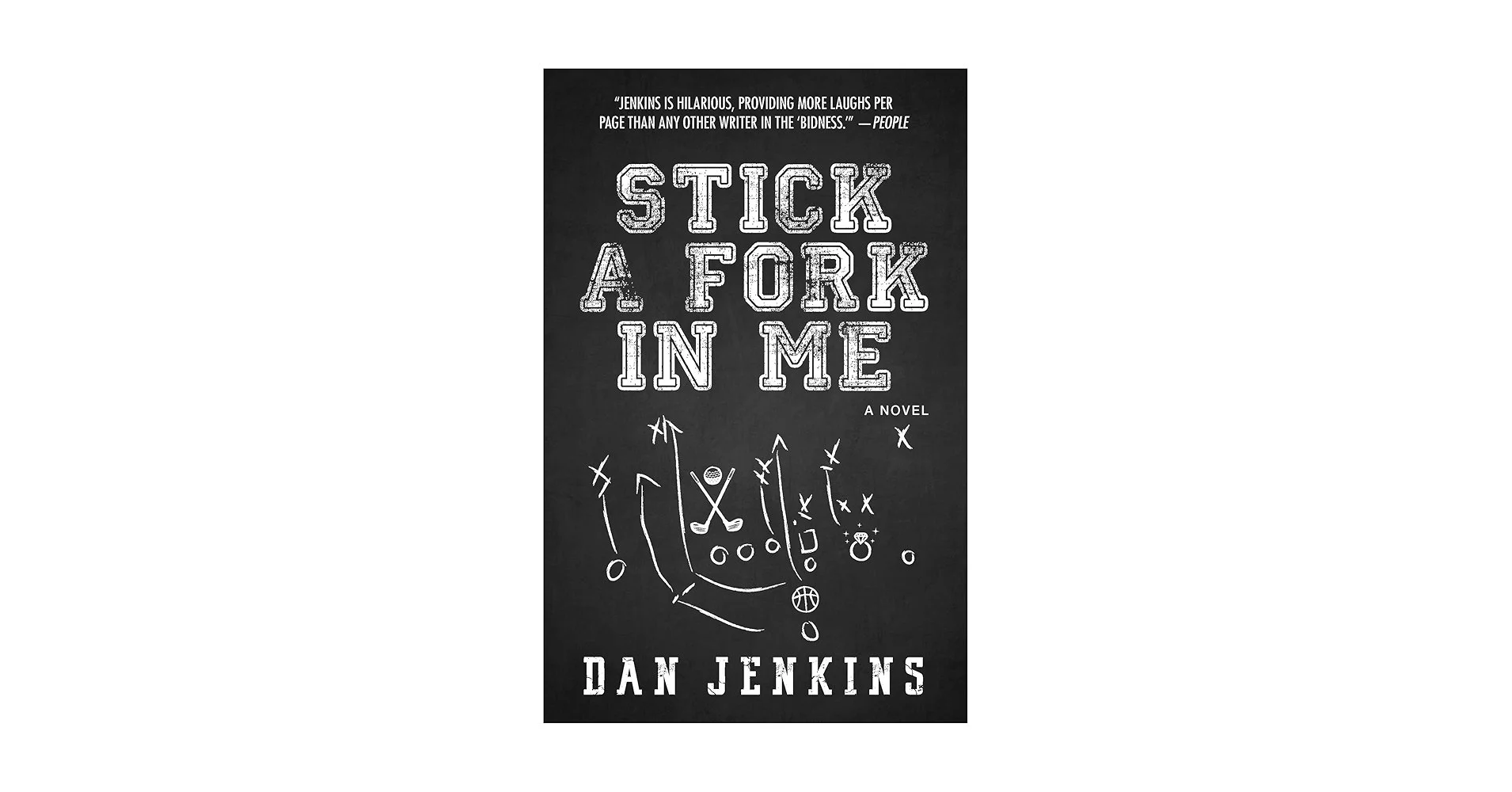
If you’re in a funk, then go out and buy Dan Jenkins latest novel, “Stick a Fork in Me.” It’s an irreverent romp delivering a tonic of laughs and amusement.

This is the legendary sportswriter’s 21st book and his 11th comic novel. At 88 years of age, Jenkins ably demonstrates he’s hitting it long and straight and not moving up to the senior gold tees. With his wicked wit and laugh-out-loud lines, he’s still reaching the par-fives in two.

The novel is about Pete Wallace, a native (like Jenkins) of Texas where he graduated with a degree from “Texas College of Fine Arts & Ranching” and where “the owls hump the chickens.” After a successful stint as football coach, Wallace moved up the ranks as an athletic director. Now AD at Western Ohio University, Wallace speaks to readers, taking them “behind the scenes of a life of a dutiful athletic director.”

The setting allows Jenkins to lampoon a host of characters and institutions, most notably big time college sports and football, “the undercard of the NFL.”

He’s joined by his golf-loving but cantankerous wife Glenda and his long-time deputy assistant, Rita Jo Foster, “a blue-eyed blond who can hold her own with those smokin’ hot babes on Fox News.” There’s lively encounters with coaches, administrators, faculty, boosters, trustees, pampered athletes, students and media members. About his often impolite comments and observations, Wallace admits, “I sometimes say things to see if I can give a coughing fit to a politically correct disciple. It’s a hobby.”

About “left-loon professors and students,” he wishes them a special kind of torture: “lock them in a room and make them listen to rap till they beg for mercy.” (By the way, Earth’s fate as a planet was doomed on, according to Wallace, on “Feb. 13, 1979—the day rap went mainstream.”

Fortunately, some pithy and funny golf lines work their way into the book, most notably when Glenda can’t understand why after Western Ohio is admitted to the Big Ten, her husband isn’t being rewarded by a membership at Augusta National. “Glenda, you don’t ask to join…you have to be invited to join,” says Pete. “So find somebody to invite us,” retorts Glenda. “I don’t know anyone who knows a member—I guarantee you if that person ever existed, our butts would be worn out hearing about his round.”

On that note, I love this rejoinder by Pete after hearing Glenda go through her latest round of golf: “I’m gonna have to have caddie fees.” (I’m borrowing that line this season.) Another favorite is Pete’s comment about teenagers: “Love means never having to say anything you can text first.”

As Jenkins’ alter ego, Wallace has favorable things to say about a Big Ten school in Ann Arbor: “I wouldn’t mind losing to Michigan fairly. I’m an admirer of Michigan. Great helmets, great history.”

But such compliments are not Wallace’s (or Jenkins’) stock in trade. Far better to expose hypocrisy, greed, and folly with satire and caricature. Suffice it to say, big-time college sports and society in general allow for plenty of scoring opportunities. In Jenkins’ deft hands, “Stick a Fork in Me” is a winner.

Stick a Fork in Me is published by Tyrus Books.

Father’s Day Gifts and a Good Book by Terry Moore

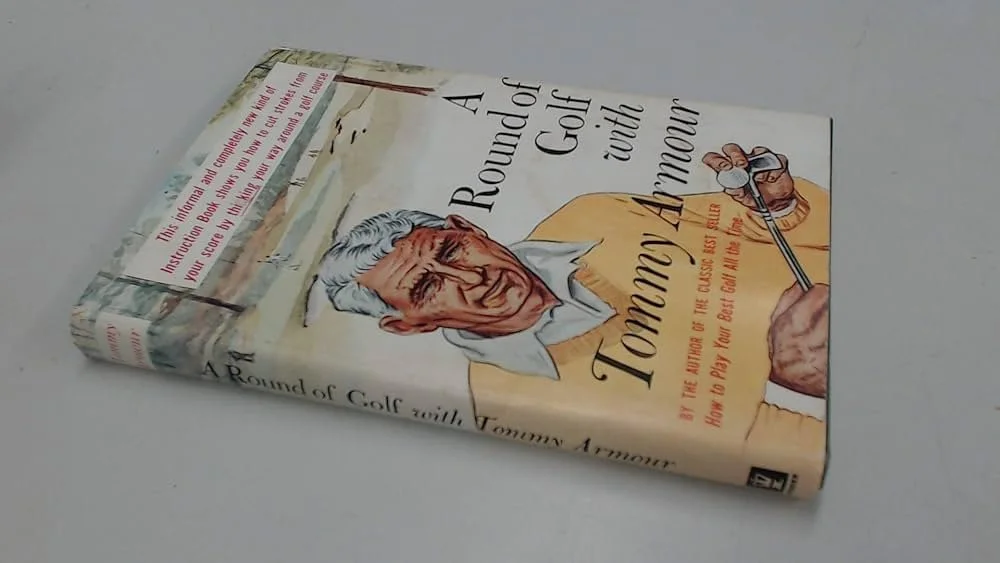
My dad was a golfer, so I often conspired with my brother and mother for Father's Day to get him an appropriate gift. Presents like golf balls—such as Sweet Shots (loved that name), Spalding Dots, Maxflis, and Titleists—and gloves (even half gloves) and an occasional book. Due to his generous and doting Aunt Dora, my dad possessed an array of golf books, usually gifts for his birthday or Christmas. One such book was A Round of Golf with Tommy Armour, a follow-up tome to his best-seller, How to Play Your Best Golf All the Time. It was released in 1959.

Recently, I pulled A Round of Golf off of my bookshelf and thumbed through the pages. In my Dad’s tiny yet legible handwriting, I relished reading his notes and reminders to himself, imparted by Armour in an informal, casual manner. To Henry D. Moore, these priceless notes were penned on one of the cover pages of the book:

Page 20: Be slow at the top of the swing

Page 70: On 2-foot putts, don’t play any break. Putt firm.

Page 75: Pause at the top, a tiny bit

It's hard to beat those tips; it’s no wonder dad wanted to preserve and locate them quickly before he played.

Looking ahead to Father’s Day and in consideration of the lasting legacy of a good book, here are some personal recommendations for recently released titles:

Playing from the Rough, A Personal Journey through America’s 100 Greatest Golf Courses by Jimmie James. At first, I thought this might be one of those braggart’s laborious recountings of playing at golf’s elite and often off-limits courses and clubs. Rather, James is a humble sort —grateful to many for his rise out of poverty and ethnic invisibility in East Texas—who upon retirement from Exxon, challenged himself with a quest.

In a single year, James was reportedly the first person in a single year to play each of the 100 Greatest Courses in the U.S., as rated by Golf Digest. The amazing and, at times, grueling journey took him “90,756 miles through 33 states, 8,797 strokes, 82 nights in hotels, and more money spent than I care to talk about.” Three Michigan courses are included in James’ well-written saga: Arcadia Bluffs, Crystal Downs, and Oakland Hills (South). Obviously, there are golf stories and vignettes galore, but also insightful reflections on race, class, and family. A Simon & Schuster book.

To the Linksland, the 30th-Anniversary Edition by Michael Bamberger. This is a veritable classic by one of our premier golf writers. In brief, this book is about how in 1991, the young sportswriter Bamberger took a leave of absence from his job and, with his newlywed spouse, headed to Europe for a year marked by caddying, keen observations and exploring the landscape of golf. After first reading it 30 years ago, the esteemed novelist and writer John Updike so admired it that he contacted Bamberger and asked to meet him. That factoid alone beats any back cover blurb praising this enchanting book. By Avid Reader Press.

Life on the Green by Ann Ligouri. I’ve known and admired the author and successful sportscaster in NY ever since we were on the same golf trip to Ireland more than 25 years ago. Thankfully, we reconnect every April when we each cover the Masters. An accomplished and savvy interviewer for cable television and sports radio, Liquori offers insights and perspective with chapters devoted to her conversations with a strong list of golf notables. Included are such A-list names as Jack Nicklaus, Annika Sorenstam, Tom Watson, Nancy Lopez, Bernhard Langer and more. Due to Liquori’s deft ear and sensibility, valuable life and golf lessons and a treasure trove of rich anecdotes are shared. In his chat with the author, Watson explained his near win at the 2009 Open Championship at Turnberry hinged on how he changed his swing five years before. “I started leveling my shoulders at address and also at impact. And it had a profound effect on how straight I could hit the ball…and in 2009, I’m hitting the ball as I ever hit in my life. I’m 59 years old, I could still move it.” A Hatherleigh book.

The Wide Wide Sea by Hampton Sides. This fascinating book’s subtitle says it all: “Imperial Ambition, First Contact and the Fateful Final Voyage of Captain John oops James Cook. Sorry, my golf mind inadvertently inserted John Cook, thinking of the current Golf Channel commentator and former PGA Tour player. No, this isn’t a golf book but it comes highly recommended for all those captivated by fast-moving narrative histories. Years of research and world travels went into the making of this book, retelling Cook’s extraordinary global voyages and native encounters—some of them rightfully controversial, if not abhorrent—as the most acclaimed explorer of his age. The New York Times last month deemed it “one of the best books of the year (so far.)”

It should be said some of these books were equally suitable were Mother’s Day. But I didn’t have my act together at the time, ever distracted by a family quest to pause at the top of the swing.