SuperStroke: A Michigan Success Story

Call me an unabashed ‘homer' when talking about Michigan-based golf companies. Especially, low-key yet highly successful ones like SuperStroke Golf located in Wixom.

“What’s SuperStroke?” asked someone apparently living with the wolves on Isle Royale.

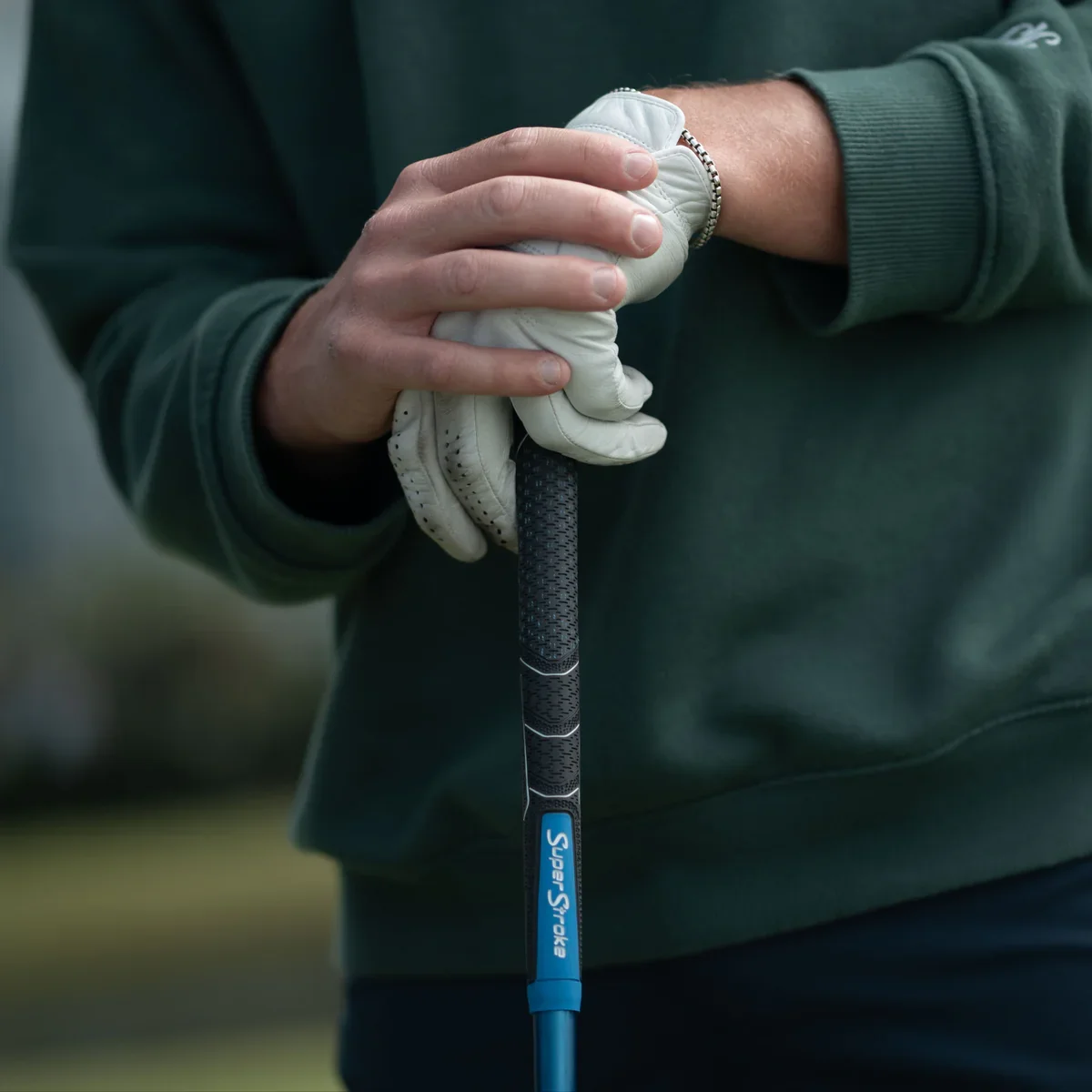
It’s the putter grip company that became a game changer in the industry for its oversized and non-tapered style. Originally named Tiger Shark Golf, SuperStroke was the brain child of CEO Dean Dingman who moved the Atlanta-based company to Wixom while recruiting a host of talented and golf-savvy colleagues like Ian Zubkoff, the Executive Vice-President of Sales.

With over 30 years of golf business experience, Zubkoff led the sales focus for SuperStroke, helping it to obtain an astounding 85% market share for consumers buying putter grips.

When speaking with Zubkoff recently, I shared that first story I wrote on the company was ten years ago when Jason Dufner won the PGA Championship at Oak Hill using an oversized SuperStroke grip. Fast forward a decade and hardly a week doesn’t go by when another Tour player wins with a SuperStroke. In the past few weeks that includes Nick Taylor (“O Canada!”), Emiliano Grillo and Wyndham Clark. In 2022, there were 50 winners using SuperStroke grips across the various Tours.

Zubkoff says Tour players are one of the keys to the company’s success. “We’re a Tour-driven company. We make our decisions based on Tour player feedback.” Zubkoff explains that when a new grip is introduced to a player it’s a reflection of prior feedback and so the player buy-in is easier.

“Tour pros are savants in terms of their feel,” says Zubkoff, “and they can pick up the differences in putter weights by a mere gram or two. Their sense of feel is insane.”

Bolstered by patents, SuperStroke made its mark with oversized, non-tapered grips but its success is more than just than one particular grip. “What was missing in the grip category was variety,” says Zubkoff who’s one of the few employees not based in Michigan. (He lives in Scottsdale but travels to Wixom regularly.)

“In the old days if players weren’t happy with their putters, they might throw it in a lake and buy a new one. Changing a grip wasn’t in their minds. SuperStroke changed that thinking.”

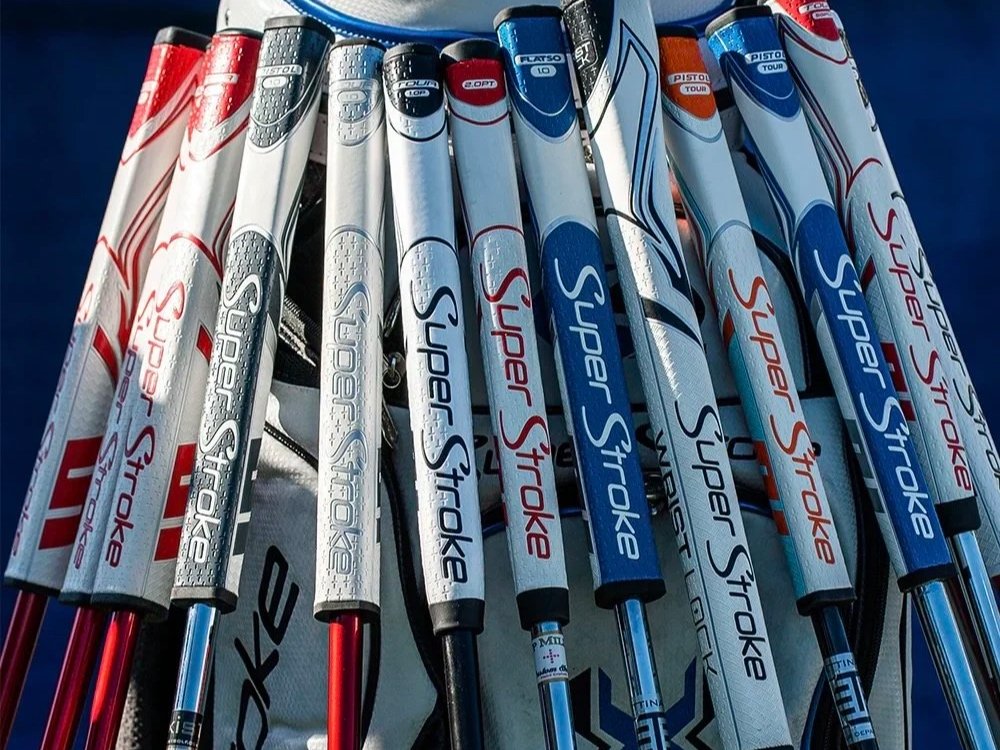
Today, SuperStroke features dozens of models including thin, moderate, oversized and tapered models in all sorts of color. “We’re not just an oversized grip company,” says Zubkoff. On top of that, it also offers a CounterCore weight for its line of grips. Offered in 25, 50 or 75 grams, these weights are easily screwed into the end of the grip with an included wrench.

With these weights, golfers now have even more options on how to fine-tune their putters.

Zubkoff says roughly 50% of Tour players add to or adjust the weight of their putter grips. Now SuperStroke allows consumers to do the same and they don’t have to make an appointment with a Tour equipment van.

“Between the various types of putters and the options for CounterCore weights, golfers have something like 160 ways to change their putters.”

That last phrase could be as catchy as Paul Simon’s song “50 Ways to Leave Your Lover.”

On the heels of its widely adopted Zenergy grips, what’s next for SuperStroke? Not content with just putter grips, the company is dipping its toes in grips for the rest of the bag. In fact, Ryan Brehm uses all SuperStroke grips on his clubs as does Jordan Spieth.

“We’re a small gorilla in that grip category but we’re growing,” says Zubkoff.

Nice to know this small gorilla is a native of Michigan.

Product Review: Bettinardi’s Kuchar Model 2 by Terry Moore

“There’s golf and then there’s tournament golf.” —Bobby Jones

Competitive players have always identified with Jones’ truism. One’s typical weekend round with its casual atmosphere and its generous gimme putts is a much different experience than hole-everything-out medal play. On that note, I would add a caveat to Jones’ adage: “There’s putting and then there’s tournament putting.” Faced with unreliable nerves during competition, golfers have resorted to variety of measures to get the ball into the hole. Some have gone to the belly putter while others have gone to the long, broomstick putter. Well, beginning in January 2016, those two options—if anchored to the body—will not be permissible within the Rules of Golf.

That’s why I’ve been particularly intrigued with the locked arm putting method popularized by Matt Kuchar. I mean, here’s a Tour player who was a darn good conventional putter (Top Ten in Tour putting in ’08 & ’09!) and then several years ago switched to the locked arm method. As Kuchar said, “I was a good putter but I wanted to be more consistent and that’s why I switched.”

Last month, I went to see PGA Teaching pro Mike Boogaard of The Pines in Grand Rapids. Boogaard specializes in putting instruction and has worked successfully with noted Michigan amateurs Tom Werkmeister and Randy Lewis. Boogaard demonstrated the effectiveness of the locked arm method. “It’s a system that forces you to rock the shoulders in the putting stroke,” said Boogaard. “Anytime you can take the hands out of the stroke, you’ll minimize the nerves.” As someone who plays competitive senior events, I was all ears on that last note. I’m a decent putter and hole my share of putts but in competition I’m too inconsistent and uncertain. So with Mike’s advice on a properly fitted putter for me, I committed to giving the locked arm method an off-season trial run.

For the putter itself, I opted for an obvious choice: the one Matt Kuchar is using. Manufactured by the Illinois-based Bettinardi Company, the Kuchar Model 2 (suggested retail is $375) is pear-shaped mallet. Boogaard recommended a 39” length and it provided a comfortable fit. It’s important to be fitted and measured for the proper length or otherwise the shaft will be too long or too short for one’s forearm. It also has 7 degree of loft. Why? Because the Model 2 features a double bend shaft with a 2.5 shaft offset. With that much built-in offset, added loft is needed to impart a better roll off of the face. Otherwise, with conventional loft the ball would skid off the face.

I used the Kuchar Model 2 for several rounds so far and its exceeded all of my expectations. First and foremost, its design and appearance are clean and elegant, sporting a soft carbon steel with pewter finish. Second, its feel is solid and well-balanced. I also liked how the ball rolled off of the face. After using a mallet with a rubber-face insert for year, I was worried this putter would deliver more “hit” to the ball.

According to Sam Bettinardi, V-P of Sales and Marketing, the Model 2 has a patented F.I.T (feel-impact-technology) Technology that is the key to its softer feel. “In the milling process, we make a second horizontal pass over the face of the putter which removes three grams of weight,” said Bettinardi. “By reducing 55% of the face material, a softer feel is guaranteed.” He also mentioned that when the company first started making putters in 1999 it used a vertical milling process on the face which delivered not only a handsome honeycomb design but also delivered a flatter face than the typical horizontal face milling.

Another classy touch with the Model 2 is the attractive head cover. Made with a quality and durable fabric, it’s embossed with Kuchar’s signature and also the American flag. Bettinardi is proud that its 65-70 employees, based in Tinley Park, Illinois, deliver a finely made product, meeting stringent ISO 9001-2008 standards, and doesn’t resort to outsourcing. “We have the talent and expertise right here in Tinley to make all the putters we’ll ever need,” said Bettinardi. “Best yet, our offices are only a few steps away from the factory floor.”

Coincidentally, my wife has been putting with a Bettinardi putter since 1999 when a company rep exhibited at the West Michigan Golf Show and she smartly purchased one. Oh no, I can hear her now giving me the needle as she sees me with the Kuchar Model 2:

“You see, there’s putters and then there’s Bettinardi.”

Why Did I Wait So Long for a Wedge-Fitting?

The golf industry describes me as someone belonging to the “avid” golfer demographic. My long-suffering spouse would agree.

Though an avid, I never had a wedge fitting despite knowing the advantages of fitting in irons and drivers. I’ve done several of those fittings over the years. But never a wedge fitting. Until a few weeks ago. After doing so, my first reaction was: why the heck did I wait so long?

For the fitting, I was in good hands with Jake Hamilton, the well-regarded master fitter and manager at Club Champion in Grand Rapids. There are a number of capable fitters in the area but Jake and I have known each other for years and we’re fellow members at The Meadows GC at GVSU.

“One of the common errors I’ve encountered with players, even frequent golfers, is when they don’t know how far their wedges carry,” said Hamilton whose store ranked in the top 20 for fittings of all 120 stores nationally for Club Champion. “Many will confuse total yardage with carry and that’s a mistake. You’re only as good as your carry.”

Hamilton first checked out my wedges which are all Titleist except for a 57-degree Miura wedge which has been off and on in my bag for a few years. My other lofts were 43, 48, and 54. Generally, he was okay with these wedges. “Often, I find players having unnecessary wedges in their bags.”

He then switched the Trackman to a short par-three setting which included an island green. Guess he was serious about how far the ball would carry. I warmed up and hit a number of solid shots to the green. Fortunately, I’ve been playing at a simulator on a weekly basis this winter so I’ve kept the rust off my swing.

On that note, Hamilton says the off season is a good time to be fitted for wedges. “With the explosion of simulators, people are staying active with their swings. There are some pluses to hitting shot outdoors, but the Trackman numbers inside a bay never lie.”

Hamilton kept switching out shafts and wanted me to give him feedback on the feel while noting the height and carry of the shots taken. What I wanted was more height and he focused on what wedges were best for me.

Next, he switched the Trackman to a shot requiring a short pitch over a bunker. I was pleasantly surprised how my feel while making a pitch matched up to the result. Considering how important good chipping and pitching are to scoring, especially mine, I really wanted to get these wedges dialed in.

What amazed me in the fitting process were the myriad options available not only in lofts but also in terms of shafts and bounces for wedges. In all, the SM10 lineup consists of six grinds and 25 discrete loft, bounce and grind combinations.

“Titleist is one of the leader in wedges and it hits the mark for bounce and grind,” said Hamilton. (He was quick to note that all the major brands, like Callaway, Cleveland and TaylorMade, make solid wedges that he has fitted for his customers.) But considering these many options, it was worth it to have an experienced fitter sort through them and make recommendations.

When asked how he has evolved as a clubfitter since he opened the Grand Rapids store over four years ago, Hamilton replied: “You have to grow with the game. Along with more experience, I’ve improved my skill set by staying current with technology and the product lines.”

Hamilton is a good player with a low handicap index so he knows the nuances of the game including what types of courses and turf one usually plays. “I might recommend something different if someone plays a lot of golf in Florida as opposed to Michigan. But I don’t want to get too carried away with it,” said Hamilton.

Taking less than an hour, Hamilton recommended the Titleist SM (Spin Milled) 10’s line of wedges in these degrees, bounces and grinds: 50 (08) F-Grind, 54 (10) S-Grind and 60 (08) M-Grind. He recommended graphite shalfs with Regular flex. They’ll match up well with my other irons while leaving me the option to switch up the wedges in my bag.

The specs on the SM wedges feature these assets: its groove cutting process provides a scoreline that delivers a higher (yes!) and a more consistent spin; its TX9 grooves are specifically designed based on loft and finish. The 50 & 54-degree wedges are cut narrower and deeper while the 60 degree is designed with wider and shallower grooves.

When the Titleist wedges arrived, I was fortunate to have already scheduled a simulator session with my buddies followed by nine holes at a local public course. As it turned out, it was the warmest February day in Grand Rapids ever.

At the Trackman simulator, I arrived early to work with Brandon Roby—a PGA teaching pro and owner of BRG Performance Center—who guided me through a process of gapping my wedges. We determined the carry and the total yardage for all of my them and I kept a record of them on my phone.

Roby made a good observation that my 43 and 48 degree wedges will come off of the face faster than my new and softer SM wedges so I had to take that into account. The SM10 wedges will offer more spin, especially around the greens.

Roby suggested the type of course I’ll play this season may lead me to mix up my wedges. For example, if I’m playing a course with deeper bunkers and rough, it might be wise to include the 60 degree and drop out the 54 degree.

 For shallow bunkers and less gnarly rough around the greens, I could drop out the 60 and keep the 54. Roby said the 54 is fine for bunker play as one can open up the face more if needed. Makes sense.

While playing nine, I really liked how the wedges performed around the greens. The SM wedges all had the same soft feel. I particularly liked the spin imparted by the 54 degree on my chip shots.

It’ll take more trial and error to fine-tune my wedges and to dial in the precise yardages.

But one thing is certain: a wedge-fitting was long overdue.