Masters Notebook, Tuesday & Wednesday
By Terry Moore
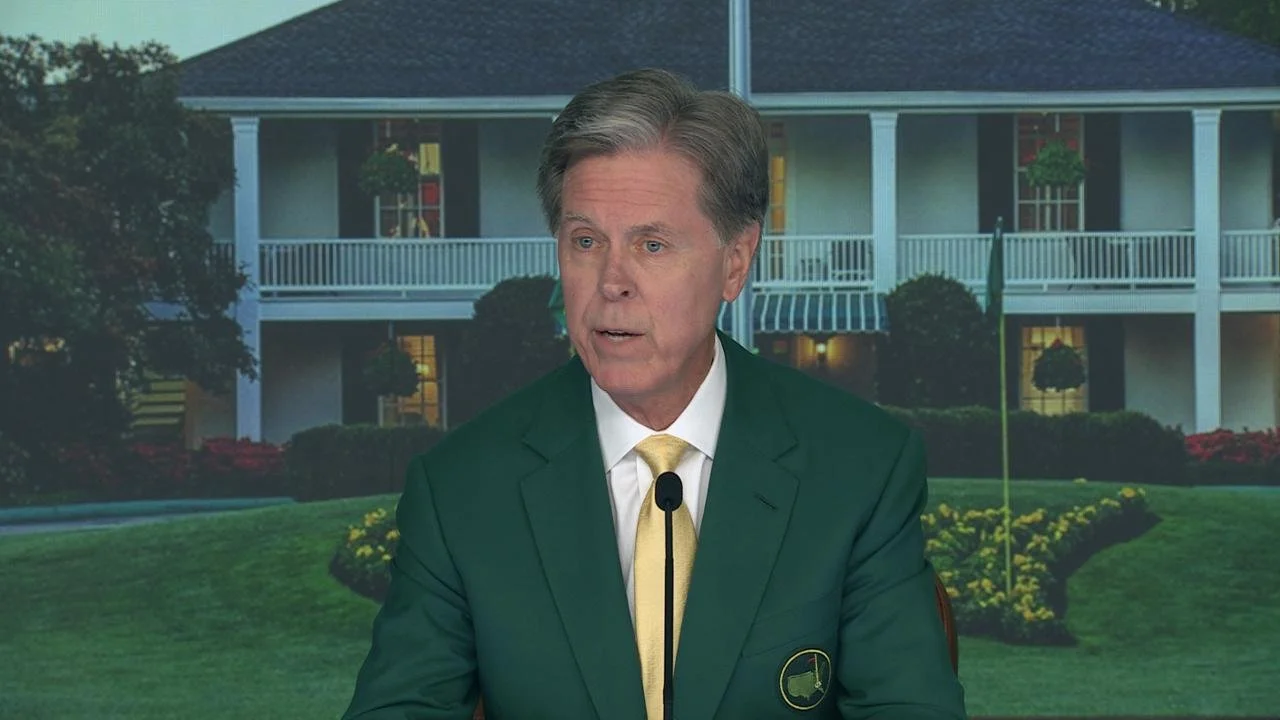
Fred Ridley
Tuesday
I can't recall the last time the weather forecast here for the Masters was mostly sunny and rain-free for the week. Dry weather will mean firm and fast conditions on the fairways and greens. The premium will be hitting greens with a higher trajectory and spin, and if not, a deft short game.
England's Matt Fitzpatrick, winner of the recent Valspar, was in the Interview Room this morning. I asked him, "You're known for your meticulous note-taking. I'm curious, did you start taking notes at your first Masters, and how has it progressed over these years?”
"Yeah, I've still got the same notes I took. They're still in my book, little things. I remember playing in a practice round with Justin Rose in 2014 when I was an amateur. He gave me some advice about the first hole and just hitting it in the center of the green, giving yourself 20 feet every time, you're never going to go wrong. That's still in my book. So you use that.
Just a lot of the stuff is where to miss different flags and where the best places are that you feel like you can get up-and-down…as well as breaks on the greens just from hitting putts over the years…Yeah, I still have a lot of that in my book."
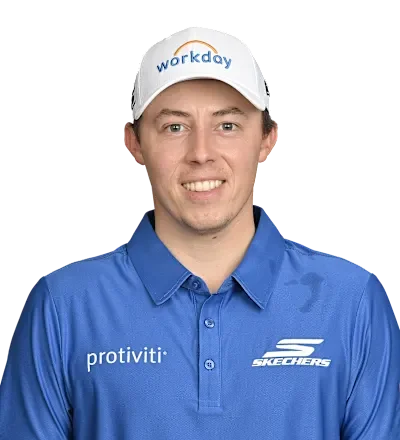
Matt Fitzpatrick
Ranked 6th in the World Rankings, Fitzpatrick is a popular Masters pick because he has the distinction of making 10 consecutive cuts, one less than current leader Hideki Matsuyama. Also, it was pointed out to Fitzpatrick that he shares a record with a Masters notable: he earned low amateur honors at the 2013 Open Championship (finished T44) and 2014 U.S. Open (finished T48), becoming the first amateur since Bobby Jones in 1930 to concurrently hold low amateur titles from those majors.
At his Press Conference today, Rory McIlroy was relaxed, humorous, and insightful. Having won last year and freeing him of the burden of expectations to win the Masters and career Grand Slam, Rory is a favorite to repeat. He reminds me of what happened to Phil Mickelson. First playing as an amateur in '91, Mickelson finally broke through in 2004. After that, he won two more Masters titles ('06, '10) along with three more majors, including two PGAs and an Open Championship. Here's how Rory expressed himself in terms of the difference felt this year:
"I think the best way that I can describe it is -- well, firstly, I would have never gotten up here this early. I would have never arrived on a Saturday. I usually arrive earliest Sunday night but probably Monday. I think for the past 17 years I just could not wait for the tournament to start, and this year I wouldn't care if the tournament never started (laughter). That's sort of the difference...I feel so much more relaxed."
Tommy Fleetwood revealed some insider nuggets about his preparation for the Masters in his interview:
"I think that I've…figured out ways of how you can use the range. I use the short-game area to match the course, in a way. I think there are a lot of things that you can do there. So I probably do that better.'‘ Then he shared what equipment changes he made for this week:
"The biggest thing is the 9-wood for me. If I can put myself in position on the par-5s or the 4th long par-3. I can't really hit that high 4-iron, so 9-wood helps me a lot."
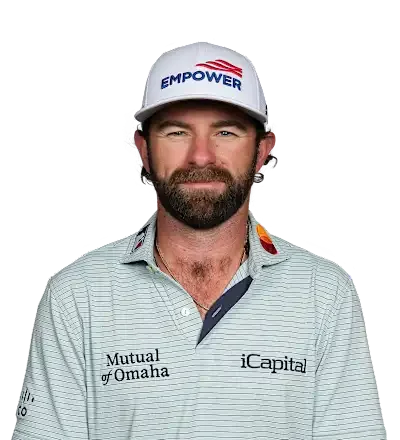
Cameron Young
In an era when elite golfers talk more about their mental coaches and psychology, Cameron Young was refreshingly candid about how his religious faith is central to him and his family:
"Yeah, our faith is very important to us. It's something that I feel like brings us together. It's very important, I think, for all of us to kind of have that part of our lives be a central portion of what we do, individually and as a family. [Going to Mass] is a nice opportunity for us to be together, to kind of share something together. We find a different church every week.
I get a lot of really, really nice comments, people saying, hey, thanks for setting a great example for my children…Honestly, it's great to hear because I don't feel like that's the case all the time, and that's one area where I'm really happy to be able to bring attention to that part of our life.
I just think it's a great opportunity to show other people that's what we do.”
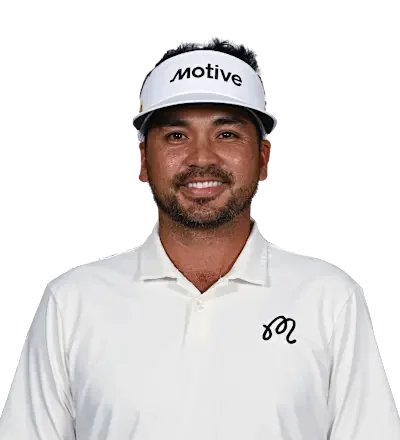
Jason Day
Jason Day, coming off a strong finish in Houston, revealed a change in his set-up, which has resulted in more club head speed:
"I didn't realize how far left-sided I got with my swing or my stance. And, essentially, I was probably around 168 to 170 ball speed at the start of the year. We made a quick change, going back to more 50/50, like front foot and trail foot, and then also 50/50 like toe to heel. And as soon as I did that, it jumped up 10 miles an hour on the ball speed, which was good."
Wednesday
These are the highlights of Fred Ridley's annual Masters Chairman's Press Conference:
Introduced Geoff Yang, new Chairman of the Competition Committees. Yang has been a member of the Masters Tournament Rules Committee since 2007 and the Competition Committee since 2018.
Mentioned the reopening of The Patch and a nine-hole short course named The Loop at the Patch. This project was developed in partnership with the City of Augusta, the First Tee of Augusta, and Augusta Technical College. The Patch and The Loop will formally reopen to the public on April 15. "It will be a community destination where golf is accessible, affordable, and fun for everyone," said Ridley.
Also announced another community project, the TGR Learning Lab of Augusta. The concept was conceived by Tiger Woods and his TGR Foundation more than 20 years ago. The Augusta Learning Lab will be the fourth location in the United States and will provide underserved youth with access to STEAM education and workforce development opportunities. Mobile programming will begin next year with the opening of the lab targeted for 2028.
Ridley talked briefly about the new Player Services building, featuring state-of-the-art fitness, physio, and locker room facilities, along with an upper-level dining room where players and their families can gather.
"Players arrive here each April with the goal of leaving on Masters Sunday wearing a green jacket. Our goal is to provide all players with the level of attention, care, and hospitality that is best in class in golf and all of sports."
He wrapped up his remarks fully supporting golf's ruling bodies efforts to rein in the increase in distance generated by the modern golf ball and equipment.
"We have been consistent in our support of the governing bodies in their effort to regulate the distance elite players are hitting the golf ball. Recognizing that the implementation of the Overall Distance Standard test for golf balls may be delayed to 2030, I want to reemphasize that support and affirm our position as the USGA and R&A represent their collective obligation as custodians of the game.
I also want to be clear that our position is grounded on much more than protecting the Augusta National golf course. We will continue to make modifications as are necessary to react to driving distances that in some cases exceed 350 yards.
Unfortunately, many courses, including some iconic venues, do not have that option. Until recent years golf has been a game of imagination, creativity, and variety. The game has become much more one-dimensional. As players drive the ball prodigious distances and routinely hit short irons into par-4s and even some par-5s, this issue goes beyond competitive impacts. Increased course lengths result in more time, more cost, and more environmental concerns.
The data that has been shared with all stakeholders makes one thing clear: The impact to the recreational game will be immaterial. All of us in this room and millions of weekend golfers around the world will be hard-pressed to notice the effects of this change, and I do not believe our enjoyment of the game will be affected.
As for professional golf, we hold firm in our belief that the greats of the game are defined not merely by how far they hit the ball, but their extraordinary skill in all aspects of the game. Their ability to shape shots, to take on risk, and to execute under pressure is at the heart of championship golf and is best displayed through a full spectrum of shot-making opportunities.
Regulation of the golf ball is not an attempt to turn back time or stifle progress. It is an effort to preserve the essence of what makes golf the great game that it is."
In sum and in keeping with what Ridley vowed several years ago:
Augusta National will NOT be an 8,000 course for the Masters.
Images courtesy of the Masters (Ridley) and the PGA Tour